Tag Archives: Spirituality
Come to the Party…
Come to the Party (2 Chronicles 29-30)
Introduction: Let me add one more promotional for our Tuesday nights. I love spending time with our Gathering each Tuesday. The dinner is always good. The study time is a chance to learn and to talk about life and Scripture. And the diversity of students and young professionals gives rise to a lot of interesting questions and spiritual conversations. For instance, two week ago I spoke with a student who is studying neuropsychology – that’s about how the brain works. And we talked about none of us needs to be stuck in bad habits. The brain can be our ally, our best friend in breaking destructive patterns. We’ve got some smart people here at ICF. If you don’t believe me, Look beside you to your right, now your left. Doesn’t it look like we have smart people here? And you’ve given us proof by being here today with us.
Let’s get started with our message. Our study today began in my personal devotions. Do you know what it’s like to read your Bible and you come across a passage, and it seems that God makes these verses powerful and special and important. I experienced an intense awareness of God’s goodness and presence as I was reading – and that led to further study; I would like to try to convey some of what I discovered and I believe it will encourage you and draw you further into His grace toward you.
So, let’s pray and invite the Spirit of God to teach us today and reveal the love of the Father to us.
Earlier this year, I had the honor to teach at a local Bible College near here. My course for that semester last year was on Apologetics – it’s the study of how to answer questions about Christianity. And we invested a number of hours comparing the claims of Christianity with other world religions. We studies Islam, Buddhism, Shintoism, Hinduism, and more looking at the basics of their beliefs compared with Christianity.
As I was teaching these 18 university students, our conversation led to just how lost and misguided other faith systems are. I’m a firm believer in freedom to worship and express one’s self as I believe this opens many doors for ministry and sharing the Gospel. And While I respect people for their choices and where they stand in politics and religion, it is clear that the values and claims of Christianity – and how the Christian faith has invited us to relate to God and to others – is radically different from other systems of faith.
And at the core of this radical difference is the person of Jesus Christ. His pure and unstained holiness in life, his miracles and teachings, and most importantly his revolutionary love and invitation to relationship to all who would choose Him. This sets Jesus apart from every other religious leader and makes Christianity unique.
When Jesus preached that the Kingdom of Heaven is near, he invited his disciples and others into a radical relationship of grace with Himself, and a revolutionary approach to a life of love toward others.
He invited everyone, regardless of past sins, political stance, gender, economic standing, race or national origin, to trust Him. Everyone was invited to His party!
He lived and demonstrated the lavish grace and forgiveness of His Father. And it was this revolutionary love that led Him to the Cross. More of this at the end, because I want you to join me in 2 Chronicles 29 for our message today. And as you find 2 Chronicles in your Bibles or on your Bible applications on your device, I want to frame our passage with some background.
Transition: The prophet Samuel from the Old Testament served the people of Israel as one of their judges; in fact, he ended up being their last judge. And in his old age, the leaders of Israel came to him and said this:
“Now appoint a king to lead us, such as all the other nations have.” And they got Saul, then King David, followed by Solomon in the United Kingdom of Israel. And things went downhill from there. And for the next three centuries the people of God in the divided kingdoms of Judah and Israel lived under the rule of one king after another – an occasional good and a lot of bad kings.
Our passage today is about a good king. Hezekiah was a ruler in Jerusalem who chose to be God’s leader. He was a good king among the many who did evil by leading the nation toward other gods. From his very first month as king, he determined to reclaim the Temple for worship of the Lord God and decreed that Jerusalem was to be a place to worship the living God and only Him.
I wanted to give you this background because during the first few months of Hezekiah’s reign, three things happen that show the wisdom of this king, and the favor that God showed His people because of him.
Read 2 Chronicles 29:1-12
The first thing he did was to reclaim the Temple so the people of God could worship Him. Can you imagine going away for a few years, and then returning to our church building here, and stuff was stacked up and stored, and there was rubbish everywhere, and you couldn’t even see the stage or the cross on the wall to your left? I can’t imagine, and you know that your pastor would never let this happen.
But, after years of evil leaders, the Temple had become exactly that, and more. In fact, the previous king had practiced the most evil of religious practices in the Temple and in Jerusalem. The Temple was in a bad way. And he is how the godly King Hezekiah began.
- He began with what he had and trusted God with the outcome. When he started, he had a team of 14 from the Levitical tribe of Temple leaders. It seemed an impossible situation. Too few people. Too big a task. Have you ever read through the genealogies and lists in the Old Testament? There are pages and pages, just of Levites and priests! He began with what he had and trusted God with the outcome. And the King gave them this job: recruit more priests and clean the Temple.
Here’s how bad the Temple was in disrepair. It took them seven days just to clean out the courtyard so they could open the door. Additionally, the number of workers in the Temple had shrunk. And Hezekiah ignored the obstacles of a mountainous task and a small workforce. He began with what he had and trusted God with the outcome!
Can you think of another small group of people that become a movement? Absolutely. Jesus chose how many? Twelve. He walked around the fishing district and said – you, you, and you two also. He walked through the streets of Bethsaida and looked into the fig groves and picked two more disciples. He saw a political zealot in the crowds in Jerusalem and chose another. He walked through the Tax district (the Agenzia delle Entrate – can you believe a disciple could be there?), and he called another. And He gathered the Twelve He called from all areas of the culture minus one traitor, taught them about life in the Kingdom, trained them to pray, heal the sick, cast out the enemy, empowered them, and they turn the world right side up.
Could it be that we need to do the same with what we face today? We may have too little income, or too small influence, or we may feel we have too little education, or limited skills in speaking, relationship, or time. Bring it to Him. Bring who you are and what you have and ask Him for the best outcome. I believe God’s glory and grace shine best in impossible situations.
For Hezekiah, with the beginnings of a new group of priests to lead the worship in the Temple, Hezekiah tasked this small group with making the courtyards and the Temple ready for worship. As this fourteen recruited and involve more of what the passage calls “their brothers,” they moved one step at a time to make this place one of worship and prayer.
Let’s read our next verses in this story for our next 2 Chronicles 29:16-17, 28-30
- They Cleaned the Outside and the Inside – step by step, one step at a time. The King’s team started at the courtyard – the most obvious – and move inward to the holiest places – the most intimate. And they hauled away the rubbish and the idols that cluttered the place. They swept, cleaned, and shined all the elements of worship that had been ignored or dirtied.
Restoration is hard work. Take a look at this picture of the last home my wife lived in during college. We learned that a piece of property in Susan’s family in Georgia is without owners – her parents have passed away, and two houses and land are sitting there – for ten years. It needs restoration.
When we restore a place, the obvious stuff, the big stuff goes first. But, when that’s done, the real work begins and we can see all the little things that need cleaning and repairing. We turn on the lights, and we see even more that needs restoring.
Restoration of our lives is hard work, too. Jesus has promised to make us new and renovate our lives. The hard work of restoration has already happened – he already sees the finished product! He sees you as a new creation. But then Jesus asks us to allow Him into the different areas of our lives, to remove the big stuff that keeps us down, to fix the places that we’ve not allowed the Spirit of God to touch. And He turns on the light in places that need His presence. And he changes us.
Here’s the Principle – whether it’s restoring a home or restoring a heart. It’s this: the rooms inside are more important to God than the outside. What’s outside matters. The big stuff matters. But God wants to get us to the holy places deep inside our hearts. This is the place of worship and intimacy.
Illust. My Heart Christ Home The story of My Heart, Christ’s Home illustrates this. The author compares our lives to a house -with kitchen, workshop, living room, bedroom. It’s the story of an invitation to Jesus to make himself comfortable in each room that makes up our lives.
Let me take you to the third action Hezekiah took that changed the nation. After the first sacrifices and worship in the Temple, Hezekiah looked to the nation and determined that, as a people of God, worship would bring the tribes and people together.
Everybody was invited to the Party.
Let’s read 2 Chronicles 30:15-20
- The nation was divided. Judah and the Southern Kingdom was still together, but the rebellious Northern Kingdom of Manasseh and Ephraim and who claimed the name Israel had been conquered by the enemy. And they all needed the call to worship.
- The people were not ready. And while many refused and laughed at this call to an “out-dated” religion, many came.
- The leaders were too few. Even many of the priests and Levitical leaders had ignored the call to worship. And were shamed to miss out on the party.
- The day for Passover was past. Imagine trying to get the word out by runners from one end to the other, city after city; then prepare the city for the crowds; then everyone had to travel to Jerusalem. And even though the day of Passover was past, they worshiped and celebrated anyway.
From one end of Israel to the other – from north, south, east and west, he sent runners to every city and he invited everyone to come and seek God and worship him.
What can you do when you throw a party and things go wrong? You throw the party anyway! Invite everyone you can, get the house ready, and work with what you have! Do you know what happened when everyone showed up for worship? They might not have brought their best, but they showed up. God heard their prayers and healed the nation. And their worship party lasted two week!
Conclusion: So, what does this mean to us. Today. You and me. This morning.
Would the worship team come up, please.
What speaks to me in this invitation – whoever you are, whatever you’ve done, wherever you’ve been. You are invited. If you are hurt, forgotten, sick, broken. You are invited. If you have ignored God until now, you are invited. If you have been hiding out and not using what God has given you. You are invited.
So, let’s worship a few minutes and wait and see what God might want to do here at the end of our time together. Pray.
(We are called to come to the party and becoming worshipers. Making our lives the place Jesus feels at home. We are called to bring others with us. The nations need to discover the power of worshiping Jesus.
Illust. Marriage Feast of the Lamb
God heal me. God heal my church. God heal our city and our nation.)
“… I’ve never seen so many…”
When the doctors and their team working in Liberia during the height of the 2014 Ebola epidemic saw the damage the disease caused, one reportedly said “I’ve never seen so many bodies.” One doctor was in charge of gathering and disposing of those who died from the disease; he and his team worked tirelessly to serve the Liberians by helping them through the collection and, with a respectful process, cremation of their dead.
Stephen Rowden was a first time volunteer with Doctors without Borders; his team processed between 10 and 25 cremations a day in Monrovia as the work sought to contain the epidemic to the region. He said his team of 36 have shown no signs of the disease even though they worked in such proximity to the dangers of the contagion.
When ask about his motivation, Dr. Rowden confessed that he is “a practicing Christian” who finds support and “strength from his faith and family.”
Since the first centuries of Christianity, those who follow Christ run toward the danger, the tragedy, the hurt… even the contagion, while most flee. From the Antonine Plague in the mid-100’s that wipe nearly 25% of the Roman Empire into eternity and those many epidemics that followed, Christ-followers sought to stay and help and serve…and suffer, in order to live a life that gives credit to the Good News and the love and power of God.
While many might say that Christianity was established in the empire because of edits, it really spread as a revolution of love, sacrifice and suffering. We run toward the need, even if the rest are running away.
Dr. Rowden captures this kind of faith through his actions.
Live sacrificially,
Rick
(Thanks to a great NPR interview by at https://www.npr.org/2014/10/09/354890862/in-collecting-and-cremating-ebola-victims-a-grim-public-service and Baker Book called Restoring All Things: God’s Audacious Plan to Change the World through Everyday People by Stonestreet and Smith.)
Do I know you?
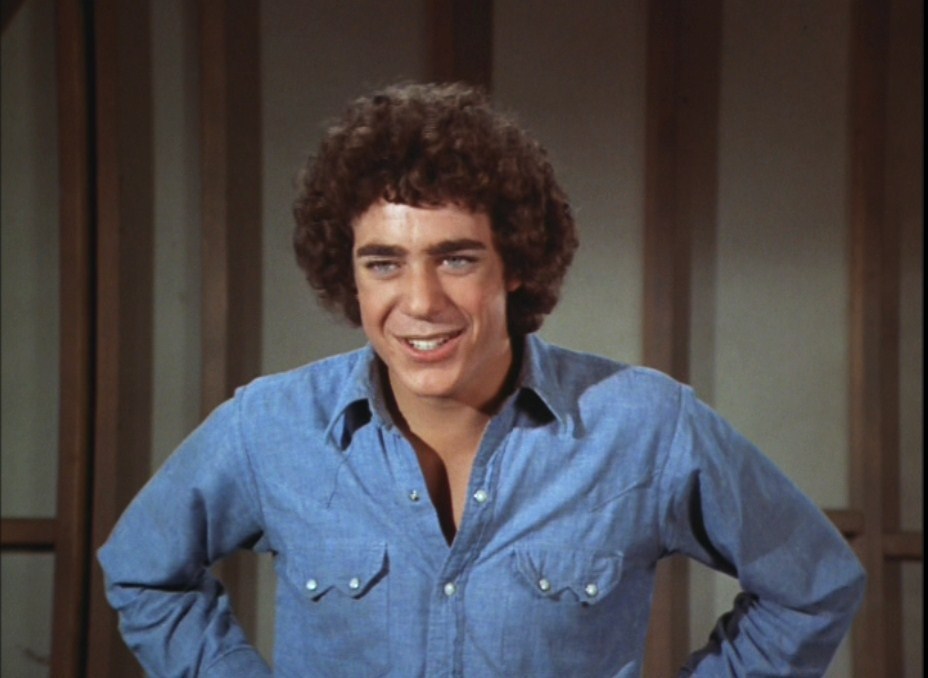
I’m seeing doppelgangers. Every time I go out, at least the past few days, I’ve seen people I know. Yesterday, I saw Danny DeVito. Today, I saw Robb, a guy who went with me on my first Italy mission trip (he was a clown, really, literally, a clown – but today, he was normal.)
My step-mother-in-law showed up a lot in the piazzas of Padova. But, then again, there are a lot of little old ladies (sorry, Eleanor) in Italy. They are outspoken. I had one get nose-to-chin with me for carrying shopping bags home one Sunday. She said her piece fast and with many gestures and grimaces. I think she told me it was a holy day and I couldn’t shop for more than one bag full (I had two.)
This doppelganger issue must mean something. I miss home. And people. Don’t get me wrong; I love my city and the people we get to meet with and share life with. The work with our new Fellowship is invigorating. But, I hit a spot in my year where I need my culture and my people.
It means something else, too. Cultures, languages, habits, gestures, colors and shades, all may be very different; still, we’re the same in far many ways than exterior admits. We all need respect, acceptance, love, forgiveness, kindness, and especially a person who will listen.
I’ve got to go – I think I just saw Abe Vigoda.
Still Listening,
Rick
Some people say I have a doppelganger (I’m not so sure):

The word for the year…anonymity
A friend of ours planned a tour of Italian museums and recalled afterward that, while there were some awe inspiring artists –Caravaggio, Giotto, Tintoretto – the favorite by far was an “unknown” whose art was everywhere, very diverse, and over the nameplate of Sconosciuto.
My wife and I just finished reading through the Bible in a Year (on the YouVersion app under As it Happened – we recommend it for its chronological order). Near the end of our journey through the Bible, we read Hebrews, a book written to next-gen Jewish followers of Jesus. In the famous “Hall of Faith” chapter, the writer recounts the faith (and fate) of well-known Hebrew heroes. He also cites the unwavering faith of a crowd of believers who stood firm, often to the death, in their belief that God is worth it all. They are anonymous, at least on this side of heaven.
I have discovered that the biggest fear I’ve faced for years is anonymity – call it a fear of obscurity or becoming unknown, unseen, or unheard – but, until recently, this fear has been an overlooked but active drive in my life.
I know I can acknowledge this, and choose to turn from this fear … and embrace the privilege of obscurity.
My word of guidance for 2019 is Anonymity.
A university library in England maintains a seven-section archive of journals, pictures, magazines, and records related to Chinese missions over the past 150 years. When the first (and current) Chinese president of China Inland Missions, long-since renamed Overseas Mission Fellowship, walked into one of the rooms housing these records, he was overcome by the magnitude of seemingly anonymous people who had given their lives for his country-people, many martyrs for the Gospel of Jesus.
Dr. Fung told this story to students attending the missional conference Urbana ’09 (you can hear his story in the interview online) that, as he scan through the extensive lists, journals and pictures, he was reminded that the work of evangelism is done by people willing to live without a desire for fame, glory, and recognition.
When John the Baptizer saw Jesus gaining attention, he was asked by a somewhat envious follower what he should do. His response is timely and timeless: “Jesus must increase; I must decrease.”
In my case, the fear of anonymity has been too frequently a companion. I want Jesus to be enthroned, but I want a chair close by near the right side.
It has guided decisions. I’ve chosen worry and delayed action and played it safe so I wouldn’t look bad. And usually looked bad anyway.
It has silenced conversations. I’ve talked myself out of conversations I should have had or introductions to Jesus I should have made so I could protect my insecure reputation. And stayed insecure.
It has hidden love. I’ve left too many relationships lingering on the surface because I either didn’t want to know or chose not to be known. And loved less by doing so.
Today, careers are made by being seen, heard, photographed, liked, shared, hearted, retweeted, and reposted. Fame is even possible by taking the stage “anonymously.” Artists hide their identity behind walls, bags, masks, and pseudonyms and “stay famously in the dark” to become celebrità oscura – Sia, HER, Elena Ferrante, Daft Punk, Banksy.
The most visible evidence of following Jesus is that I love in greater and greater measure. And the greatest measurement of love is sacrifice, putting others above myself, pushing others up and staying below the stage lights, decreasing so Jesus will be famous. He says He sees what’s done secretly and perhaps that’s more than enough recognition.
Maybe this year will produce such a beautiful work of truth and healing and compassion that anyone who sees it will know it was the hand of the Master Artist Who crafted it. I will decide more selflessly. Speak more freely and compassionately. Love without fear or shame. I expect to be tempted to pick up a brush every now and then and offer to script my name into the corner. But, it’s my desire that it remain His work under the name plate of Sconosciuto.
In my own words,
Rick
P.S. I know it ironic to blog about anonymity. I like to know my words matter. And I’ll keep working on my motivations.
P.P.S. Conosciuto means “known.” Scononsciuto means “unknown.”
 Rick's studies and devotionals