Tag Archives: Purpose

Pastor Rick’s Study Notes: Hebrews 9:24-28.

Pastor Rick’s Study Notes:

(PRT) Hebrews 9:24-28

v. 24 For Christ has not entered a holy place constructed by people copied from what is genuine; but right now he is in heaven appearing in the presence of God making our petition for us. v. 25 And neither did he offer himself up again and again, just like a high priest enters into the Holy of Holies each and every year with the blood from another sacrifice. v. 26 If that were the case, he would need to suffer again and again from the beginning of the whole universe until right now. Instead, Christ has been revealed through his own sacrifice for sin’s cancellation once for all until the very end of the ages. v. 27 For throughout time, it is determined therefore that each person dies once, then afterwards faces judgment. v. 28 Likewise, Christ has been offered once in order to bear away the sins of many and afterwards he will appear again to the ones freed from sin and waiting for salvation.

 v. 24 For Christ has not entered a holy place constructed by people copied from what is genuine; but right now he is in heaven appearing in the presence of God making our petition for us.

Jesus went to the temple, but though he was the only one qualified to enter the Holiest place and offer sacrifices, He never did.

He offered Himself in the place it mattered – the Holy Place of Heaven. He had to rise from the dead to make this happen.

In this verse, the word emphanistamai is appeared as in visibly present. Different from “appeared” in v. 26 and v.28. This is appeared as in disclosed or coming into to be seen for the purpose intended. Εμφανιζω. John 14 says that when we trust in Jesus, he shows up to show us the Father’s love, he reveals himself to us. He has come with a purpose. He is our advocate!

He is in the priestly role of intercession.

v. 25 And neither should he offer himself up again and again, just like a high priest enters into the temple each and every year with the blood from another sacrifice.

Every year, the same sacrifice has to be presented from a human context. But Jesus once for all who trust in Him handled the sacrifice once for all time.

Again and again is from the present active subjunctive.  The blood from another would be the cows and goats of the Day of Atonement.

The Day of Atonement is the sabbath of sabbaths; this is the day most ceremonial. What Jesus did to attain our forgiveness is so much higher than the highest day of Judaism.

On the Day of Atonement: 1) the enemy had no right to accuse, 2) sacrifice was made fully for all sins for all nations, 3) the day of perfect pardon from sin repented of. That day is now the norm for the Christian. The accuser is shut down, the nations are invited to take Jesus as Lord, and our forgiveness carries the strength of the name of the only one who could forgive.

v. 26 If that were the case, he would need to suffer again and again from the beginning of the whole universe until right now. Instead, Christ has been revealed through his own sacrifice for sin’s cancellation once for all until the very end of the ages.

This perpetual sacrifice would mean that Jesus never accomplished the sacrifice. Sin’s annulment or cancellation. Strong word. Since the beginning of creation is “from the foundations of the world.”

The work here for appeared is pephanirotai – manifested. To be revealed or appear. This word declares. It’s the same word in 2 Cor 3:3 Clearly, you are a letter from Christ showing the result of our ministry among you. This “letter” is written not with pen and ink, but with the Spirit of the living God. It is carved not on tablets of stone, but on human hearts. He’s come, he’s appeared to forgive and redeem. He saves!

v. 27 For throughout time, it is determined therefore that each person dies once, then afterwards faces judgment.

This is “a judgment” and not “the Judgment.” This is the first layer of judgment, that is either belonging or rejecting Christ. Matt 25 – goats and lamb passage, those who know him; that is know him in such a way that the rest of life is invested in those who need Him.

“Determined” is “laid up for” as in already in the plans of God.

v. 28 Likewise, Christ has been offered once in order to bear away the sins of many and afterwards he will appear again to the ones freed from sin and waiting for salvation.

His sacrifice is for eternity for all who trust in Him. Here the word for “appear” is a third one, ophtasetai, to be seen. Orao. To be physically seen or experienced. He’s coming back!

Bear the sins away may point to the moment sin was piled on the shoulders of the only man who had won the right to suffer in order to give peace, the be afflicted in order to heal, and to die in order to give life.

We die and face judgment; Jesus died for us so we could be freed from sin and enjoy salvation.

Waiting for salvation – Philippians 3, we are awaiting our entry into heaven since we are citizens awaiting salvation. Our passage today answers the big questions of life, like:

(1) Why Am I Here?

(1) Why Does My Life sometimes feel unimportant or insignificant?

(2) What causes me to be so restless?

(2) Where does the longing for more come from?

(3) What is the Meaning and Purpose of my Life?

(3)Where Do I go after this life?

Small Group Questions:

  1. What is your first memory of feeling like you were created for something special?
  2. In what ways does our passage contrast with the idea that we get to live again and again through ideas like reincarnation and karma?
  3. How does the fact that we live and die and then face judgment make you feel? What can you change in relation to this judgment?
  4. Would you like for our group to pray for you about anything related to these verses?
  5. How can we support and pray for you this week?
Pastor Rick’s Study Notes & Small Group Questions: John 3:16-21

Pastor Rick’s Study Notes:

(PRT) John 3:16-21

v. 16 For God loved the world so much that He gave His one and only Son so that everyone who puts their faith in Him should not perish but instead have eternal life.

v. 17 After all, God did not send His Son into the world to condemn the world but for the express purpose that the world could be saved through Him.

v. 18 Whoever puts their faith in Him is no longer under judgment; but whoever has not put their faith in Him already lives under judgment for this very reason: they have not put their faith in the one and only Son of God.

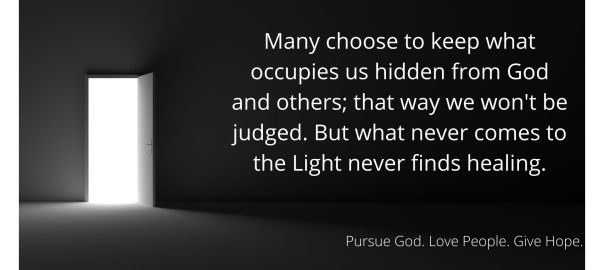
v. 19 This, then, is the judgment: The Light has come into the world, but people more willingly loved the darkness instead of the light for they were occupied with wickedness.

v. 20 For each person continually practicing evil despises the light and does not step into the light; otherwise, what they are occupied with is uncovered.

v. 21 But, everyone who keeps doing what is true steps into the light; that way, the deeds they are occupied with might be revealed for what they are, by the hand of  God.

v. 16 For God loved the world so much that He gave His one and only Son so that everyone who puts their faith in Him should not perish but instead have eternal life.

Some commentators feel that, beginning with this sentence, Jesus quits talking and John begins his comments on the meeting. There is no indication that Jesus has left off; he knows who he is and what he came to accomplish. Jesus is giving us the “establishing shot” of the Good News of the Kingdom. It does read easier as a Johannine aside.

John’s use of agape is his trademark word for what God the Father is doing through Jesus. He loves. That he loves the world, that is all the people of the earth, is news to the religious leaders who assume they are the only lovable ones. Do you ever think of yourself as “loveable?” God. Loves. You. Romans 8:32.

This passage captures the intimacy of the Triune God, the essence of God’s plan, the depth of his love, the reach of his provision, the power of His redemption and the severity of the enemy’s hold on man.

For God – 1 Thess 5:23, So loved – Romans 5:8, The world – 2 Cor 5:19, He gave – dozens of times in John’s Gospel, “the father sent me,” His one and only Son – Hebrews 1:2, whoever – Romans 5:6, believes in Him – 1 John 5:13, not perish – 2 Peter 3:9, have life – John 10:10, John 1:12.

v. 17 After all, God did not send His Son into the world to condemn the world but for the express purpose that the world could be saved through Him.

Every nation; not just the Jewish people. He came to revolutionize the world, one nation, one tribe, one tongue at a time.

While Jesus’ coming lays out a clear choice for salvation and restoration to all people, and those who refuse or ignore will be separated and judged, it is not for this judgment that Jesus came; it is for salvation, for love, for relationship for a lifetime.

Condemn may be better as judge, in order to fit the rest of Jesus’ argument. He didn’t come to bring judgment; he came to save.

God sent, as it God, the one who enters at the demand of another a new place of people. Apostello – God the Father sends (apostello) Jesus on mission.

v. 18 Whoever puts their faith in Him is not under judgment; but whoever has not put their faith in Him already lives under judgment for this very reason: they have not put their faith in the one and only Son of God.

An interesting aside: the dark isn’t bad when it conceals good deeds from the eyes of evil people who might pursue for harm. Keeping actions in the dark when those very actions might, if seen, bring harm; that is a time when we ask God to make them obscure.

This verse is a dividing line. Those who have light poured in, who have life; or those who keep their pursuits in the darn,

v. 19 This, then, is the judgment: The Light has come into the world, but people more willingly loved the darkness instead of the light for they were occupied with wickedness.

Occupied is the same word for works. Occupied might fit better since this verse is discussing what we keep on working on. If my works are the continual focus of darkness without ever seeking the light, then judgment is certain.

They are enamored with the light and the values it brings; but they hate the Light, the personality of God’s own Son. Could it be that those in darkness want what the light brings but only if they can manufacture it themselves? John 5:35 They loved, that is, they were enamored with, the light for a time, but rejected it in the end.

v. 20 For each person continually practicing evil despises the light and does not step into the light; otherwise, what they are occupied with is uncovered.

Evil in verse 19 is a harsher word than here in verse 20. Here, evil means fruitless or meaningless. If we occupy our lives with things worthless and that have no substance, we are despising light and hope to keep our practices under cover.

“practicing evil” as in the works of the individual that ignore God’s ways and truth.

v. 21 But, everyone who keeps doing what is true steps into the light; that way, the deeds they are occupied with might be revealed for what they are, by the hand of  God.

The word for doing in the context of evil and good is different. One means to keep practicing evil; the other could mean pursuing good.  “Do truth” means that our pursuits are based on the truth of God’s Word morally and of value to the Kingdom.

The deeds are what aligns with God’s ways and are empowered by his hand. When we do good in His name, He empowers it beyond our own capacities.

In the film industry, the establishing shot is the context builder. It establishes the person in context to location and tone as well as the time period and feel of the coming shots. They give sweeping, wide focus to what the main character will face.

Your life and mine is God’s writing his story into us and through us. Our testimony. Our relationship is in context with the Gospel of the Kingdom, the ultimate story.

Small Group Discussion:

  1. Do you have a favorite movie character that, if you could, you would become? Why?
  2. John 3:16 is the possibly the most famous verse in the Bible. When did you first see it? When did you first discover what it means to you? Or are you still trying to find out about it?
  3. Jesus gives everyone the same starting point in life according to v. 18. What does this say?
  4. What is God’s solution in these verses for us to know Him?
  5. Do you ever think of yourself as “loveable?” In light of John 3:16, how does God see you?
  6. What is going on in your life that you need God’s touch or provision for?

Pastor Rick’s Study Notes: Mark 13:28-37

Pastor Rick’s Study Notes:

(PRT) 13:28-37

v. 28 Now then, learn from the story of the fig tree: when the time comes for its branch to become tender and its leaves to open, you know that summer is about to happen. v. 29 In the same way, you know that when you see these signs about to happen you know that the fulfillment of these things is also near and already at the door. v. 30 Trust me when I tell you that this generation will not pass away until these things have happened. v. 31 Heaven and earth will pass away, but my words will in no way pass away. v. 32 But when it comes to that very day or hour, no one knows – neither the angels in heaven nor the Son, but only the Father. v. 33 Keep your eyes open and stay alert, for you do not know when that time is. v. 34 That time is like a man who goes on a journey, leaves his house and gives each of his servants authority for their work; and the doorkeeper is ordered that he should keep watch. v. 35-36 You should watch, therefore, because you do not know when the master of the house returns, whether at evening, midnight, before daybreak, or morning; or else when he comes unexpectedly, he should find  you asleep at the job. v. 37 For this reason, my word to you all is: watch and be ready.

Pastor Rick’s Notes:

v. 28 Now then, learn from the story of the fig tree: when the time comes for its branch to become tender and its leaves to open, you know that summer is about to happen.

It’s a comparison between how summer approaches with signs from spring, and how his contemporary generation will see what’s coming, and for those of us awaiting His return, how the end times will approach with signs increasingly before it happens.

They just learned another lesson from the false fig tree. Now they learn from the flourishing fig tree. As it sprouts and brings life out of a winter’s barrenness, it parallels (parable) how the gradual and increasing signs of the end times will point to His return.

v. 29 In the same way, you know that when you see these signs about to happen you know that the fulfillment of these things is also near and already at the door.

These things are near because He is near to  returning. The Parousia is imminent.

v. 30 Trust me when I tell you that this generation will not pass away until these things have happened.

This generation could be this race or nation. But the eternal oversees one generation and one nation. It is this generation meaning the that very generation that recognizes the signs happening so rapidly. When the Spring is here, that generation is here, too.

It’s a complicated verse to interpret. One interpretation is fairly sure: He also could be referring backward to the initial question. When will the walls tumble in Jerusalem? Within the generation hearing his voice.

If Jesus is talking about  a nation or people, it could be the nation of Israel or the people who seek him first. Israel, or we, will always be until the end times are fulfilled.

v. 31 Heaven and earth will pass away, but my words will in no way pass away.

He claimed eternity for his words. And it is true; his words are thoroughly woven through the centuries and will in no way pass away.

v. 32 But when it comes to that very day or hour, no one knows – neither the angels in heaven nor the Son, but only the Father.

This is a curious thing for God the Son to say. He is limited only for the good of His life as the Son of Man in relation to those he teaches. The limit is by design, even though Jesus and the Father are one.

v. 33 Keep your eyes open and stay alert, for you do not know when that time is.

The term, “keep  your eyes open” is watch. Uses only four times but always to be alert.

v. 34 That time is like a man who goes on a journey, leaves his house and gives each of his servants authority for their work; and the doorkeeper is ordered that he should keep watch.

This person as the house owner or estate lord leaves the country. It’s not just a journey into town but an unpredictable trip that could take longer or shorter than expected.

Parallels the parable of the vineyard and the lord of the vineyard who goes on a trip, too.

Is this the leadership of the church, the servants of God through the ages, who have been given the command to reach the world for Christ, expecting anytime his arrival?

More likely, in this thought, Jesus has not left us alone with only a book and a mission. He has given us the paraclete, the Holy Spirit. He is near and he is with us. And He will return. We all, not just pastors or leaders, are in the house working at what we were created for, under his authority and power, to accomplish the mission.

v. 35-36 You should watch, therefore, because you do not know when the master of the house returns, whether at evening, midnight, before daybreak, or morning; or else when he comes unexpectedly, he should find  you asleep at the job.

If the workers at the temple were listening, they knew where Jesus was going with this. The temple leadership could show up at any time. If they were not greeted at the door and saluted on the rounds, they were in trouble.

These are the four watches of the night. That could refer to the fact that we as a world are still in the shadows until Jesus returns in his brilliant glory.

v. 37 For this reason, my word to you all is: watch and be ready.

We are to be engaged in calling, use His gifts and power, trust His Word, and follow His Spirit, even when the shadows seek to obscure the work of the Kingdom. In the four watches, we are most available and trusting.

Pastor Rick’s Study Notes: Mark 9:29-41

(PRT) Pastor Rick’s Translation

v. 29  And Jesus explained to them, this sort leaves only by prayer. v. 30-31 They left from there and passed through Galilee; but he didn’t want anyone to know they were there, because he was teaching his disciples. He explained plainly to them: “The Son of Man will be delivered into the power of men who will kill him; but after he is put to death, he will rise to life. v. 32 But they did not comprehend this message, and were afraid to ask him about it. v. 33-34 And he arrived at the house in Capernaum, and Jesus asked them: “What were you arguing about on our way here?” But they had nothing to say about one another since, along the road, they had been debating who out of all of them was the greatest. v. 35 Then he sat down and called the Twelve to gather around, and said to them: “If anyone longs to be first, he will choose to take last place and begin serving everyone else.” v. 36-37 And he took a child’s hand, and bringing him into the middle of the disciples, embraced him. Then Jesus taught them this: “Whoever chooses to take a little child’s hand and receives him in my name,  receives me. And anyone who chooses not to receive me, also choose to not receive the one who sent me.” v. 38 And John said to him: “Teacher, we saw someone driving out evil spirits in your name; but he is not walking with us; so we excluded and blocked him because he was not with us.” v. 39-40 Then Jesus commanded them: “Do not exclude and block him for no one will do powerful works in my name and, in the next breath, disparage me. For whoever is not against us is for us. v. 41 “Whoever chooses to give you a cup in my name filled with water to drink because you belong to Christ, with certainty, I tell you that he will in no way lose his reward.”

Study Notes:

v. 29  And Jesus explained to them, this sort leaves only by prayer

v. 30-31 They left from there and passed through Galilee; but he didn’t want anyone to know they were there, because he was teaching his disciples. He explained plainly to them: “The Son of Man will be delivered into the power of men who will kill him; but after he is put to death, he will rise to life.

He explained as a regular point of his teaching the kerygma.

v. 32 But they did not comprehend this message, and were afraid to ask him about it.

This message is radically different from what they expected from the Messiah. One of the reasons for regular teaching on this is so they will get it. They thought it “the Kingdom” would be set up soon and that’s a reason to jockey for the best positions when it happens.

v. 33-34 And he arrived at the house in Capernaum, and Jesus asked them: “What were you arguing about on our way here?” But they had nothing to say about one another since, along the road, they had been debating who out of all of them was the greatest.

They arrived after a quiet journey (the disciples were steamed at one another and embarrassed by their self-centeredness.

v. 35 Then he sat down and called the Twelve to gather around, and said to them: “If anyone longs to be first, he will choose to take last place and begin serving everyone else.”

v. 36-37 And he took a child’s hand, and bringing him into the middle of the disciples, embraced him. Then Jesus taught them this: “Whoever chooses to take a little child’s hand and receives him in my name,  receives me. And anyone who chooses not to receive me, also choose to not receive the one who sent me.”

Look how much teaching Jesus does without words. He sits down. He invites the twelve to join him. He sees a child and takes him by the hand and stands him right in the middle. He embraces this child. Then he talks.

In my name… the first in this passage. We embrace the forgotten and the weak in Jesus’ name.

v. 38 And John said to him: “Teacher, we saw someone driving out evil spirits in your name; but he is not walking with us; so we excluded and blocked him because he was not with us.”

Who would be using Jesus’ name to dispel darkness? This would be someone who knows the owner of this name.

v. 39-40 Then Jesus commanded them: “Do not exclude and block him for no one will do powerful works in my name and, in the next breath, disparage me. For whoever is not against us is for us.

Don’t prevent or forbid them. It’s my name and my Kingdom being expanded.

v. 41 “Whoever chooses to give you a cup in my name filled with water to drink because you belong to Christ, with certainty, I tell you that he will in no way lose his reward.”

Receiving God’s grace takes a willingness, too.