Tag Archives: Italy

Acts 2:34-41 Pastor Rick’s Study Notes and Small Group Questions

Pastor Rick’s Study Notes:

Acts 2:34-41

(PRT)

vv. 34-35 For David did not rise again into the heavens, but he himself says: “The Lord said to my Lord, ‘Sit at my right hand at the place of authority and honor, even while I put your enemies under your feet like a footstool.’ v. 36 Therefore, all Israel, you can know with all confidence that God has made this same Jesus whom you crucified, both Lord and Messiah. v. 37 And grasping all of this, the crowds were pierced to the heart and called out to Peter and the rest of the Apostles: “Brothers, what do we have to do?” vv. 38-39 Peter then urged them: “Repent and be baptized, each of you, in the name of Jesus Christ, for your sins’ forgiveness, and you will receive the gift of the Holy Spirit. For this promise is to you, to your children, and to everyone who is far away, as many as our Lord and God will call.” v. 40 And he warned them with many more words and encouraged them: “Choose to be saved from this warped and deceitful generation!” v. 41  Then those who accepted his words were baptized and around 3000 were added to their number that day.

Study Notes:

vv. 34-35 For David did not rise again into the heavens, but he himself says: “The Lord said to my Lord, ‘Sit at my right hand at the place of authority and honor, even while I put your enemies under your feet like a footstool.’

David didn’t ascend, or rise, into the heavens. In other words, he was buried just like all people.

This refers back to the other Psalm reference and the resurrection. If David, the King most revered, didn’t rise untainted by corruption, who will fulfil this prophecy? Look for the one who rises to the heavens without decay. That would be Jesus.

The main point Peter makes from this verse is that David, though a great King and revered, was not Lord. Rather, the Lord is in the place of authority and honor.

The enemies are those hostile to the Lord’s plans, the adversarial ones in opposition to His will.

He doesn’t take the place of authority and honor after all the hostiles are taken down; He is there now as the Kingdom of God comes in fulness.

During these days, if a conquering king was present, the enemies (or at least the opposing ruler) would kneel and the conqueror would set his foot on the necks of the vanquished. This signified total defeat and allegiance in servitude.

Jesus the King is conquering those at odds with him by His love and grace; and those hostile who never turn are being set in their places. The Kingdom is casting down the works of the enemy.

v. 36 Therefore, all Israel, you can know with all confidence that God has made this same Jesus whom you crucified both Lord and Messiah.

Jesus the miracle worker has now sent the Promise of the Father, the Holy Spirit (Joel), He has conquered death (David’s Psalm) and He sits in the place of authority and honor in the heavens (David’s Psalm). Based on this Biblical account from the OT, the knowledge they have of Jesus walking among them, and the present Holy Spirit, it can only mean one thing: Jesus is Lord and Messiah. And the Father has made this so!

The word for all confidence means a certainty. The word for “can know” is one that means with head and heart.

The Greek phrase means to slip or trip. You can know without a slip or trip that God has done this.

He calls on all Jews to know this since they are the recipients of the prophecies, they can know with confidence that Jesus is Lord and Messiah.

Juxtapose this cold-hearted response to the Messiah with Luke 19:41 when Jesus looks over Jerusalem and weeps for them.

v. 37 And grasping all of this, the crowds were pierced to the heart and called out to Peter and the rest of the Apostles: “Brothers, what do we have to do?”

The verb means “what, in light of all you’ve said and all we have done to Jesus, must we do?” God’s Spirit brings conviction to the heart for repentance and redemption. This is what happens when the Good News is shared with confident passion to people who get it. They get right with God.

The hearers were moved to remorse at their actions and ignorance. Now they knew. And we know that the Holy Spirit is active in making this known.

vv. 38-39 Peter then urged them: “Repent and be baptized, each of you, in the name of Jesus Christ, for your sins’ forgiveness, and you will receive the gift of the Holy Spirit. For this promise is to you, to your children, and to everyone who is far away, as many as our Lord and God will call.”

If you are uncertain what the crowd meant by “what do we do” Peter makes it clear: acknowledge you are culpable, you’ve failed God and turn from a life that does so. Announce it to the world through baptism, but not like John’s – in the Name. You’ll get the Holy Spirit, you’ll be forgiven, and the promise will be realized in Him.

Peter is speaking to “everyone” and at the same time “each one.” This is a people movement of all, one at a time, who repent, goes to the waters, receives the Spirit.

I can’t see that there is a progression of the order of actions here, since at the end, he asserts that the promise is to whoever God calls. From this, I see acknowledging Jesus as both Lord and Messiah, repentance, and a public declaration all fully together as our response to the Good News;  the Father’s response is forgiveness, relationship with the Father, and the gift of the Holy Spirit.

Luke has Jesus instructing the disciples to bear witness and call people to repentance so they can be forgiven (Luke 24). Matthew’s account of the Great Commission includes baptism (Mt. 28:19). Even in Peter’s first sermon, the nations are include – “all who are far off”.

All Israel, you know the prophecies and you can connect it all together; but to all the world, the invitation is this: turn away from a life without God to the Savior Jesus, show the world your new allegiance, and be filled with the Spirit of God.

v. 40 And he warned them with many more words and encouraged them: “Choose to be saved from this warped and deceitful generation!”

The word could mean teachings and instead of warn, declare or speak. Warn fits what come right before and right after this word.  What kind of age, season, nation or generation are they in? One that is warped in thinking and perverse in action. This generation was not thinking or talking straight and their actions were deviant and corrupt. What is our response to such? Find the place of safety and be delivered to a secure place.

“Save yourself by being saved” is the intensity; in other words, You have before you how to be saved, choose to be saved.

The age they lived in was heading toward destruction and Jesus stands in the gap.

v. 41  Then those who accepted his words were baptized and around 3000 were added to their number that day.

We always say 3000, but this affirms that they didn’t get an exact count. More or less. It was 3000-ish. Not worth the quibbling, but they had more on their minds than click off the people counter. There were now 3120 (or 3500, if you go by the 500 on the hillside); and they needed to be disciples in the ways of Jesus.

While many say numbers don’t matter – it’s the quality, not the quantity –  Acts shows a different perspective. Both are important. Here is the quantitative; vv. 42-47 is the qualitative. And in the signs and wonders of the Pentecost outpouring and Joel’s passage, we have the corroborative. Numbers, character, and evidence all point to the Gospel’s power.

Were they all baptized that day? There were pools and water features around the city so it could be possible. Not all of the 3000 stayed after the Pentecost feast; but they left saved and  baptized to live for Christ in their home town under the leadership of God’ Promised Spirit.

Small Group Questions:

Acts 2:34-41

  1. Who gives best directions in your family? Or how are you at giving directions?
  2. If you were in the crowd when Peter said v. 36 how you have felt? How does this verse apply to you since you were in Jerusalem calling for Jesus’ crucifixion.
  3. Of the three questions – Who’s in Charge of my life? Where did I go wrong? How do I get back on track? – which is most relevant to your life today? Why?
  4. How can we pray for you tonight?

Do I know you?

I’m seeing doppelgangers.  Every time I go out, at least the past few days, I’ve seen people I know.  Yesterday, I saw Danny DeVito. Today, I saw Robb, a guy who went with me on my first Italy mission trip (he was a clown, really, literally, a clown – but today, he was normal.)

My step-mother-in-law showed up a lot in the piazzas of Padova. But, then again, there are a lot of little old ladies (sorry, Eleanor) in Italy. They are outspoken. I had one get nose-to-chin with me for carrying shopping bags home one Sunday. She said her piece fast and with many gestures and grimaces. I think she told me it was a holy day and I couldn’t shop for more than one bag full (I had two.)

This doppelganger issue must mean something. I miss home. And people. Don’t get me wrong; I love my city and the people we get to meet with and share life with. The work with our new Fellowship is invigorating. But, I hit a spot in my year where I need my culture and my people.

It means something else, too. Cultures, languages, habits, gestures, colors and shades, all may be very different; still, we’re the same in far many ways than exterior admits. We all need respect, acceptance, love, forgiveness, kindness, and especially a person who will listen.

I’ve got to go – I think I just saw Abe Vigoda.

Still Listening,

Rick

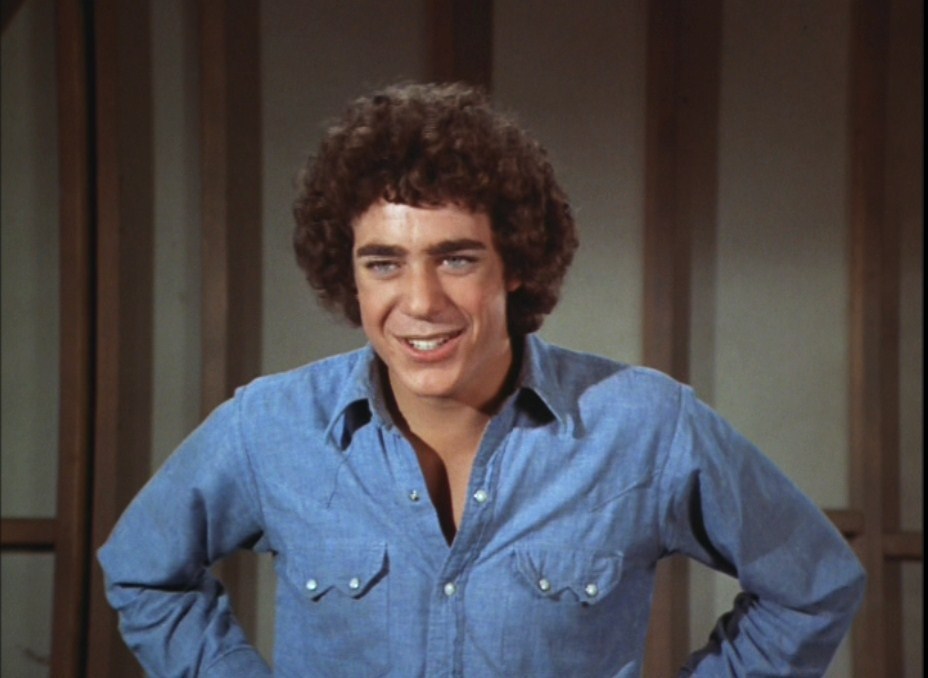
Some people say I have a doppelganger (I’m not so sure):


Changing Lanes and Staying the Course

One of my favorite teachers is Calvary Chapel, Costa Mesa Pastor Brian Brodersen. I respect how he and his church pour into missions as if the Great Commission was given directly to him and his team. And that they hold to the never-changing Truth of the Scripture while expecting God to do a new and fresh work today. He and his church are a good example of what it means to be missional.

In a recent message here in Europe, he noted that we each are to follow our calling with energy, wisely and with a clear direction –  he likened it to staying the course in the “lane God has chosen for us.” That lane gives us guidance and intentionality, and a respect for those in other lanes following hard after God, too. We work better together trusting God’s work in each others’ lives – no judgment and no disparaging, but prayerful honoring since, after all, it is God’s work.

But, we also should know that, at some point, we will sense it is time to “change lanes.” And we can have one of two responses.

At some point, we may feel the urge to change lanes because we find the going difficult. It could be pressure from others, conflict in relationships, lack of measurable progress (which can easily happen on the mission field), or outright failure or major setbacks. In this instance, it’s best to first take the faith lesson that difficulty teaches and stay the course. This is probably the hardest to do, and to urge others to do with authenticity. It’s painful. And it seems that light and hope for God’s voice are furthest away.

But in another point, God will nudge us to consider “changing lanes”: we sense it will please Him, we gather that it will point to and honor His wisdom, and perhaps the stepping out of one lane shows us how God has been nudging us into another lane. It could be that serving and ministry is going great, or we may be struggling. We still sense before us an obedient step toward something new or different. The calling hasn’t changed, the location or mode perhaps has.

It’s a good idea to listen and step toward the new lane, even if it means leaving another lane behind.

In Italy, we’ve chosen to not have a car. I blame it on the cost; the truth is, I scare my wife when I drive in Italy. So, no car for now.

But when we drive and need to change lanes, we make sure we do three things: 1) communicate, 2) keep the pace, and 3) clear the lane. Same with “changing lanes” in missions or ministry:

  • As much as it depends on me, I need to send clear signals. I seek to communicate, to meet, to call, to follow up in writing, and make sure my signal in changing lanes is understood.
  • As much as I can, I need to keep my speed for the new lane. Even though it may be tempting to slow down in the work, I need to keep the pace as I move into the new lane. Even if responsibilities change (which they likely will), keep reading, keep listening, keep connecting, keep meeting, keep praying – in truth, extra speed in some of these areas will help the lane change succeed.
  • As much as it depends on me, leave the lane clean and clear – hand off a clean slate for those who will pick up where you left off. The previous lane had ministry, roles, relationships, and expectations. Few of us are irreplaceable. Give room for closure to roles and expectations (even the best of ministry relationships has varied expectations.) Carefully handle relationships from the new lane that have been important (you can’t change another’s lane for them.)

Some may have guessed or already know. Susan and I have “changed lanes.” We closed out a 1 1/2 year of working alongside the Padova Calvary Chapel. We have good friends and frequent reminders to pray because of our journey with the pastor and his wife along with the people who have come in and out of our experience there. But, we sensed last year that we needed to “change lanes” and move out so we could move toward.

For those who wonder, we have begun worshiping in Italian on Sunday nights at a Baptist fellowship and investing in an International Fellowship at other times. We continue to meet with internationals and students, look for ways to reach out to our city, and above all, pray, study, listen, and knock on doors and build bridges so that the Gospel of truth, peace and compassion will connect others to the Kingdom of God who loves them.

From a “new lane” – Rick


The word for the year…anonymity

A friend of ours planned a tour of Italian museums and recalled afterward that, while there were some awe inspiring artists –Caravaggio, Giotto, Tintoretto – the favorite by far was an “unknown” whose art was everywhere, very diverse, and over the nameplate of Sconosciuto.

My wife and I just finished reading through the Bible in a Year (on the YouVersion app under As it Happened – we recommend it for its chronological order). Near the end of our journey through the Bible, we read Hebrews, a book written to next-gen Jewish followers of Jesus. In the famous “Hall of Faith” chapter, the writer recounts the faith (and fate) of well-known Hebrew heroes. He also cites the unwavering faith of a crowd of believers who stood firm, often to the death, in their belief that God is worth it all. They are anonymous, at least on this side of heaven.

I have discovered that the biggest fear I’ve faced for years is anonymity – call it a fear of obscurity or becoming unknown, unseen, or unheard – but, until recently, this fear has been an overlooked but active drive in my life.

I know I can acknowledge this, and choose to turn from this fear … and embrace the privilege of obscurity.

My word of guidance for 2019 is Anonymity.

A university library in England maintains a seven-section archive of journals, pictures, magazines, and records related to Chinese missions over the past 150 years. When the first (and current) Chinese president of China Inland Missions, long-since renamed Overseas Mission Fellowship, walked into one of the rooms housing these records, he was overcome by the magnitude of seemingly anonymous people who had given their lives for his country-people, many martyrs for the Gospel of Jesus.

Dr. Fung told this story to students attending the missional conference Urbana ’09 (you can hear his story in the interview online) that, as he scan through the extensive lists, journals and pictures, he was reminded that the work of evangelism is done by people willing to live without a desire for fame, glory, and recognition.

When John the Baptizer saw Jesus gaining attention, he was asked by a somewhat envious follower what he should do. His response is timely and timeless: “Jesus must increase; I must decrease.”

In my case, the fear of anonymity has been too frequently a companion. I want Jesus to be enthroned, but I want a chair close by near the right side.

It has guided decisions. I’ve chosen worry and delayed action and played it safe so I wouldn’t look bad. And usually looked bad anyway.

It has silenced conversations. I’ve talked myself out of conversations I should have had or introductions to Jesus I should have made so I could protect my insecure reputation. And stayed insecure.

It has hidden love. I’ve left too many relationships lingering on the surface because I either didn’t want to know or chose not to be known. And loved less by doing so.

Today, careers are made by being seen, heard, photographed, liked, shared, hearted, retweeted, and reposted. Fame is even possible by taking the stage “anonymously.”  Artists hide their identity behind walls, bags, masks, and pseudonyms and “stay famously in the dark” to become celebrità oscura – Sia, HER, Elena Ferrante, Daft Punk, Banksy.

The most visible evidence of following Jesus is that I love in greater and greater measure. And the greatest measurement of love is sacrifice, putting others above myself, pushing others up and staying below the stage lights, decreasing so Jesus will be famous. He says He sees what’s done secretly and perhaps that’s more than enough recognition.

Maybe this year will produce such a beautiful work of truth and healing and compassion that anyone who sees it will know it was the hand of the Master Artist Who crafted it. I will decide more selflessly. Speak more freely and compassionately. Love without fear or shame.  I expect to be tempted to pick up a brush every now and then and offer to script my name into the corner. But, it’s my desire that it remain His work under the name plate of Sconosciuto.

In my own words,

Rick

P.S. I know it ironic to blog about anonymity. I like to know my words matter. And I’ll keep working on my motivations.

P.P.S. Conosciuto means “known.” Scononsciuto means “unknown.”

Spiritual renewal in unlikely places

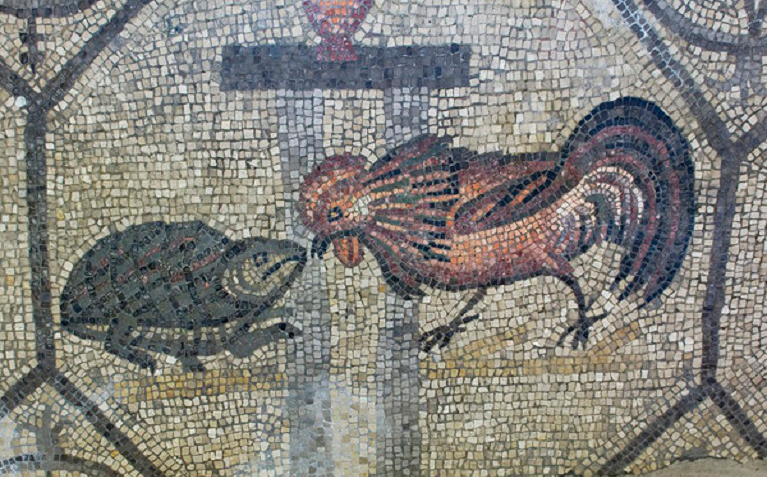
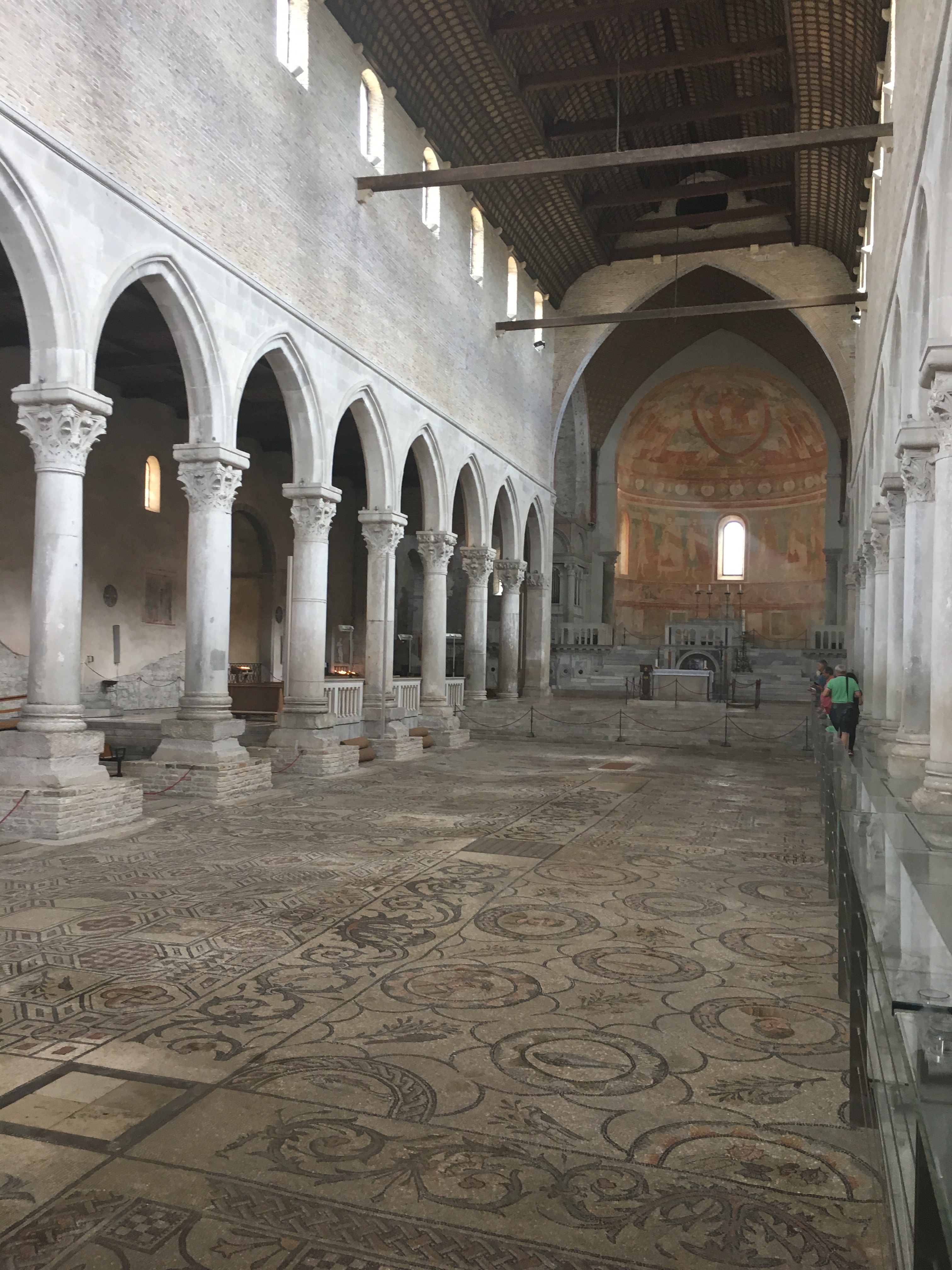
The tiled image was of a rooster and a turtle fighting it out, the rooster in frozen “near victory.” The entire basilica floor was tiled in mosaic – one inch pieces or less – that brought spiritual truths out of normal scenes of life. Baskets of bread and wine. Peacocks. A lamb with staff. Even a hippogriff (for you HP fans.)

Aquileia was one of the largest cities in Europe around 100 AD. Christianity had already begun to thrive in the international milieu of this port (it may have been Mark the Gospel-writer who first came to this city across the Adriatic from the Balkan peninsula.)

But it wasn’t until 313, and the Edict of Milan, that Christians could worship legally. Within five years, the first worship center and baptism room (yes, a full set of rooms for baptism) began. Along with what is now the largest modern example Christian mosaic art. It was art, but they mainly needed a floor that would stand up to the baptism waters (yes, they immersed), and the foot traffic of fishermen, Roman home owners, street peddlers, and senators.

My wife (Susan) and I visited Aquileia for an anniversary day trip. In this ancient church, we found beauty. I found renewal.

Christianity remained simple in this town – it was just a couple of centuries after the last Apostle died – and the truths of the Gospel found life in the symbols. God’s Kingdom is bounty – baskets of bread and wine. God is a lamb who cares for his children like little lambs.

Even the rooster (a metaphor for the dawn and light) gets the victory over the turtle (who always hid himself in darkness). In the Kingdom, light prevails but with the threat of darkness at the ready.

Near the altar, embedded in the floor are the Greek letters I-X-T-H-Y-S. The tiles declare Jesus-Christ-God’s-Son-Savior – and also introduce an extended theme of fishing, casting nets, enjoying the bounty of the sea (and a three-part scene of Jonah tossed to the sea monster, puked back onto the shore, and naked and unashamed in the care of his God).

It’s no wonder the largest scene is fishing – I’m certainly a fan – but, this city drew it’s physical existence from the gifts God gave them from the deep.

The symbolism is even more important for Christ-followers. There are fish needing to be caught. We are fishermen. And the Kingdom is the net. Simple. No grey areas here. It’s what Christians do because it’s what we are.

Within 100 years, the church was remodeled (though they kept the mosaics) and dedicated to the adoration of the Virgin Mary and the exultation of two saints (who gave their lives in for the Good News under Nero.) Those who would have chosen, if they could, to remain off-stage and point the praise the Jesus, became central. And it got complicated.

“God chose the foolish things in the world to shame the wise; God chose the weak things in the world to shame the strong. God chose the lowly things of this world and the despised thing – and things that are not – to nullify the things are are, so that no one may boast before Him.”

The less sophisticated, the better. And I found renewal and beauty when faith was simpler.