Tag Archives: freedom

Pastor Rick’s Study Notes: Mark 6:1-13

Pastor Rick’s Study Notes:

Pastor Rick’s Translation – Mark 6:1-13 (PRT)

v.1 Then Jesus left Capernaum and arrived at his hometown, accompanied by his disciples.

v. 2 And when the Sabbath came around, he took the initiative to teach in the synagogue; and many, as they were hearing him, were astonished, and wondering aloud about where he got these things and what was the source of his wisdom – especially considering such miracles that were done by his hands.

v. 3 Still they were offended by him and said, “Isn’t this just Mary’s son, the carpenter? Isn’t this the brother of James, Joseph, Judas, and Simon? Aren’t all his sisters right here?”

vv. 4-5 Then Jesus said to them, “A prophet is honored, except in his hometown and among his relatives and friends.” And he was not able to do many miracles except for healing a few people that he laid hands on.

v. 6 Still, he was astonished by their lack of faith. And he went to the villages around there and continued to teach.

v. 7-9 And he gathered the Twelve and began to send them out in two’s and gave them charge over impure spirits. He instructed them to take nothing for the road beyond their walking stick and shoes, no extra shirt, no full wallet, food, or backpack.

vv. 10-11 Also, he told them that whenever you enter a household, stay there until you decide it’s time to leave that place. But, in like manner, when you decide an area will neither accept you nor listen to you, leave, wipe your hands clean of them and shake even the dust from your shoes as proof against them. I firmly say to you, it will be more bearable for Sodom and Gomorrah when the day of justice comes than it will be for that town.

vv. 12-13 And as they went out, they declared to the people that they should repent; they sent many demons where they belong and anointed many who were sick and healed them.

v. 6:1 Then Jesus left Capernaum and arrived at his hometown, accompanied by his disciples.

Jesus travels to Nazareth where he grew up, his mom still lived, and his reputation as a carpenter was intact. A long day’s walk, for sure. This point is where Jesus moved his ministry from the seaside of Capernaum into the greater Galilean/Judean region. As he expanded his ministry, he expanded his technique including sending out the Twelve.

Jesus was broadening his ministry and he left the comforts and successes of Capernaum behind and moved steadily toward the mission of training and teaching the Twelve and heading toward the Cross.

v. 2 And when the Sabbath came around, he took the initiative to teach in the synagogue; and many, as they were hearing him, were astonished, and wondering aloud about where he got these things and what was the source of his wisdom – especially considering such miracles that were done by his hands.

This is not his first recorded teaching in Nazareth’s synagogue. His first was the declaration of His fulfillment of the prophetic One to bring the Good News from Isa 61. Here, Mark uses the term “Powers” for what Jesus brought when the Kingdom broke in. His power for miracles was present and they had heard about this before Jesus taught. After all, their lack of faith left them without the Powers displayed before. This was a favorite term for miracles with Mark (the other three are “signs,” “wonders,” and “works” used by the Gospel writers.

The wondering aloud in this verse has the tone of talking down to the occasion. The tone is “where did this guy get such things and how did the fellow come by this wisdom.”

It’s almost as if they believed because of the wonders, then turned from what was obvious (signs, wonders, powers) to what they were content with (oh, that’s just Jesus, who does he think he is?)

v. 3 Still they were offended by him and said, “Isn’t this just Mary’s son, the carpenter? Isn’t this the brother of James, Joseph, Judas, and Simon? Aren’t all his sisters right here?”

This is assumption by associate that Jesus couldn’t be the Messiah. He is too “known” – that leads to the proverb Jesus quotes. As if to say, we know too much about you to let you be something more than what we’ve always known. He’s just a “commoner” in their eyes. The truth is, Jesus was always more than they saw or believed.

The term is skandalon as they were made to stumble; they were offended. This is interesting since Jesus the carpenter likely worked with stone and other building materials. He may have worked with Joseph to do work on the very synagogue they met in. 1 Peter talks about stumbling over the very rock upon which our security and salvation should be built.

Jesus’ family shows up earlier seeking to take him home from the crowds. Even his mother was puzzled about his life and sought to protect him. And at least some of his brothers were there in the synagogue and didn’t seem to defend him.

vv. 4-5 Then Jesus said to them, “A prophet is honored, except in his hometown and among his relatives and friends.” And he was not able to do many miracles except for healing a few people that he laid hands on.

Again, “powers,” but not many because of the absence of faith. The miraculous work of the Kingdom is dependent on faith from some quarter.

In his own family or house, among his own people, they made him to be the stumbling block to faith. Keep in mind that his brothers were likely in the congregation listening, and they didn’t even have his back.

v. 6 Still, he was astonished by their lack of faith. And he went to the villages around there and continued to teach.

Jesus walked out of Nazareth, it would seem from the Gospel accounts, for the last time. He stopped in at the villages around there and it seems that he makes his way back toward his disciples. Perhaps, considering the expanded ministry that was ahead of them and in his plans, Jesus allowed the some of the Twelve to rest up, see their families and friends, and prepare for his message to gather – which came in the next verse.

The division of this is right in the middle of the verse. He was astonished. Then he began his next ministry excursion into Galilee and beyond, doing exactly what he would in the next verses send the Twelve to do.

v. 7-9 And he gathered the Twelve and began to send them out in two’s and gave them charge over impure spirits. He instructed them to take nothing for the road beyond their walking stick and shoes, no extra shirt, no full wallet, food, or backpack.

Jesus connected however they did so back then with the Twelve, gathered with them, gave them instructions (Matthew covers this the best), and sent them out in different directions. The goals were: 1) live by faith, 2) build relationships that last, 3) test the message with a call to repent to see who was ready, 4) bring evidence of the Kingdom with healing and freedom, 5) learn, 6) report back in for the celebration.

The walking stick was for both protection from animals and for stability along the road. The wallet was what they shouldn’t depend on. The backpack should be left at home. Extra food was left behind, too, as this was a hospitality culture.

The demonized were no threat to them as they walked together with another and in the power of the Kingdom. They were given authority, or charge, over any evil or impure spirit and could and did send them “packing” as The Message says.

Illustration: Due due in Italian. Two two. In Greek duo duo.

That he began to send them out indicates that he started this process that would continue as a part of his training. He sent them and continues to send them. He empowers them and continues to empower them.

Here is one of the frequent “contradictions” that sometimes crop up in disputes about the efficacy of Scripture. Mark says take the staff you have; Matthew and Luke say don’t take a staff. The resolution is found in Mark: don’t go out a get a staff if you don’t already have one; but if you do, take it. In other words, no special preparation for this excursion: no extra food, no extra shirt or shoes, not even a staff if you didn’t already have one.

vv. 10-11 Also, he told them that whenever you enter a household, stay there until you decide it’s time to leave that place. But, in like manner, when you decide an area will neither accept you nor listen to you, leave, wipe your hands clean of them and shake even the dust from your shoes as proof against them. I firmly say to you, it will be more bearable for Sodom and Gomorrah when the day of justice comes than it will be for that town.

The term “come into a house” intimates that they would enter into the family experience. Our perspective, since we are not such a hospitality-oriented culture, is that they had to “go looking” for someone who might perhaps take them in. The culture was really a reverse of this. Families in a village would see a visitor near the end of the day and they would take turns inviting that visitor to stay with them. The two disciples didn’t go door-to-door hoping to find someone gracious enough to put them up; they were seen, and they were invited.

In Jesus’ point-of-view, this would happen, that is, until the ones offering hospitality found out they were His followers and brought a message of repentance. Then, they might be rejected. If this happened, he wanted his disciples to leave behind any bitterness or animosity by washing their hands of the village, shaking the dust off the bottoms of their feet, brushing the dust from their clothes, and moving on. The Father would see this as would the townspeople as a rebuke of the village.

vv. 12-13 And as they went out, they declared to the people that they should repent; they sent many demons where they belong and anointed many who were sick and healed them.

The disciples would use oil to place on a sick person as a tangible sign of the Kingdom’s presence and evidence of the remaining work the Kingdom brings. When the Kingdom presence is there to heal, healing happens. The person doesn’t get sick again when they don’t “feel” the Presence. A lot we can learn. The Kingdom is not at the Father’s whim; he is intentional and willing as we ask, believe, turn to Him, and pray.

The demons were “cast out” – that is, they left the person in bondage and went where the belonged.

Again, proclamation affirmed by demonstration.
Surprised by an Angel… and the Call to Tell the Story!

Nearly everyone loves to hear a good story. Movies, novels, poems, and digital versions of it all, invite us to become a part of the action or the suspense, or the romance, or the journey. Most stories we read or watch or listen to come and go. They may touch us or speak a bit; but they are easily filed away somewhere dusty and hard to find. Some stories are grab our hearts and our imagination. We identify with the people or the crisis they face and how they survive.

Then, there is the story that comes along once in a lifetime. Not only does it capture our imagination – it changes our lives. We look back on this rare story, the characters and what they experienced, and we realize that what happened meets us right where we live, it changes how we see life, and that story redefines who and, more importantly, why we are.

That’s the story the sheepherders found themselves a part of over 2000 years ago on the hillside overlooking the town of Bethlehem. Luke 2:1-20 are the verses that, surprisingly, make up an assignment my high school teacher at NMBHS way back when had me memorize and recite (yes, that was another day.)

It’s the story of Joseph and his betrothed wife Mary, their trek to Bethlehem, the birth of God’s one and only son, Jesus, and a bunch of unwary sheepherders who became a part of the Story of stories.

1At that time the Roman emperor, Augustus, decreed that a census should be taken throughout the Roman Empire. 2(This was the first census taken when Quirinius was governor of Syria.) 3All returned to their own ancestral towns to register for this census. 4And because Joseph was a descendant of King David, he had to go to Bethlehem in Judea, David’s ancient home. He traveled there from the village of Nazareth in Galilee. 5He took with him Mary, to whom he was engaged, who was now expecting a child. 6And while they were there, the time came for her baby to be born. 7She gave birth to her firstborn son. She wrapped him snugly in strips of cloth and laid him in a manger, because there was no lodging available for them.

This baby, who is both King and Savior, was born in perhaps the most available and approachable place in the town – in a stable around the corner from a hostel, just shouting distance from the streets of the town. God chose to send His Son, fully human and fully God, to be born where word would get out. And this prepared the town for what happened next. And, this is when the sheepherders are invited into the story.

8That night there were shepherds staying in the fields nearby, guarding their flocks of sheep. 9Suddenly, an angel of the Lord appeared among them, and the radiance of the Lord’s glory surrounded them. They were terrified, 10but the angel reassured them. “Don’t be afraid!” he said. 

The Good New story met the sheepherders right where they lived. And it began with the herders who drew the night watch. While their partners caught up on sleep, an angel appeared right in the middle of their conversations. And this angel had just come from the presence of the Father to bring the news about the Son. And the glory of God remained.

And they were terrified. They were used to fighting off wild animals or climbing down the cliffs to rescue a lamb. But, an angel! How many times in the Bible did God show up through His presence, through a vision, or through an angel’s visit – They were scared beyond words. And the answer: Don’t be scared! God met these sheepherders right where they lived.

  11 “I bring you good news that will bring great joy to all people. 11The Savior—yes, the Messiah, the Lord—has been born today in Bethlehem, the city of David! 12And you will recognize him by this sign: You will find a baby wrapped snugly in strips of cloth, lying in a manger.”

If the angel’s visit was at first terrifying, the message that he brought was liberating. As good Jewish sheepherders, they heard this message through all they knew about Lord God of Israel.

  • Good news means freedom.
  • Messiah and Lord means salvation.
  • And if you throw in King David, they understood they would be God’s people again, under the rule of His King.

The message from the throne room of God through this single angel literally changed who they were. Sure, they remained sheepherders. But this Good News brought the promise of…

  • Peace that comes with freedom from the oppression of the enemy.
  • Hope that comes with the promised Messiah.
  • Celebrative Joy that comes with being together as God’s people ruled by His King.

And whether in response to the Good News being proclaimed on the hillside or in response to the faith and joy of the shepherds, the worship of the heavens broke through into the physical realm, and…

13Suddenly, the angel was joined by a vast host of others—the armies of heaven—praising God and saying, 14“Glory to God in highest heaven, and peace on earth to those with whom God is pleased.”

This was more than the sheepherders could contain and, by now they were all together on the hillside echoing the same rejoicing. They had to see it for themselves.

15When the angels had returned to heaven, the shepherds said to each other, “Let’s go to Bethlehem! Let’s see this thing that has happened, which the Lord has told us about.” 16They hurried to the village and found Mary and Joseph. And there was the baby, lying in the manger. 17After seeing him, the shepherds told everyone what had happened and what the angel had said to them about this child. 18All who heard the shepherds’ story were astonished, 19but Mary kept all these things in her heart and thought about them often. 20The shepherds went back to their flocks, glorifying and praising God for all they had heard and seen. It was just as the angel had told them.

There in a stable for animals, the greatest expression of God’s love slept. The message propelled the shepherds to check it out for themselves and discover if the Good News was really the Good News. And it was. And it changed both who and why they were. They had to tell others and fanned out through the streets of the town telling anyone they saw that Jesus, the Messiah, the Lord and King was born – in a stable, just around the corner, right where anyone could find Him.

The Good News met the shepherd right where they lived, and the truth of the message of Christmas transformed who they were and became the reason for why they lived. God’s great Story intersected their story and surprised them and transformed them.

  • This Christmas – surprise you with His peace, His love, His joy, His hope. He is God near to us.
  • His Good news meets us where we do life.
  • He invites you to approach Him, come to him – with fears, with broken plans and promised, with empty and dead spots in our lives.
  • And he speaks to you right now – no fear except the awe of a Savior with unchangeable love, no loneliness or emptiness because he fills us and comes close, no dead spots because he brings life and mercy.

Welcome again to the Story. Praying it intersects your story frequently in 2020!

Come to the Party…

Come to the Party (2 Chronicles 29-30)

Introduction: Let me add one more promotional for our Tuesday nights. I love spending time with our Gathering each Tuesday. The dinner is always good. The study time is a chance to learn and to talk about life and Scripture. And the diversity of students and young professionals gives rise to a lot of interesting questions and spiritual conversations. For instance, two week ago I spoke with a student who is studying neuropsychology – that’s about how the brain works. And we talked about none of us needs to be stuck in bad habits. The brain can be our ally, our best friend in breaking destructive patterns. We’ve got some smart people here at ICF. If you don’t believe me, Look beside you to your right, now your left. Doesn’t it look like we have smart people here? And you’ve given us proof by being here today with us.

Let’s get started with our message. Our study today began in my personal devotions. Do you know what it’s like to read your Bible and you come across a passage, and it seems that God makes these verses powerful and special and important. I experienced an intense awareness of God’s goodness and presence as I was reading – and that led to further study; I would like to try to convey some of what I discovered and I believe it will encourage you and draw you further into His grace toward you.

So, let’s pray and invite the Spirit of God to teach us today and reveal the love of the Father to us.

Earlier this year, I had the honor to teach at a local Bible College near here. My course for that semester last year was on Apologetics – it’s the study of how to answer questions about Christianity. And we invested a number of hours comparing the claims of Christianity with other world religions. We studies Islam, Buddhism, Shintoism, Hinduism, and more looking at the basics of their beliefs compared with Christianity.

As I was teaching these 18 university students, our conversation led to just how lost and misguided other faith systems are. I’m a firm believer in freedom to worship and express one’s self as I believe this opens many doors for ministry and sharing the Gospel. And While I respect people for their choices and where they stand in politics and religion, it is clear that the values and claims of Christianity – and how the Christian faith has invited us to relate to God and to others – is radically different from other systems of faith.

And at the core of this radical difference is the person of Jesus Christ. His pure and unstained holiness in life, his miracles and teachings, and most importantly his revolutionary love and invitation to relationship to all who would choose Him. This sets Jesus apart from every other religious leader and makes Christianity unique.

When Jesus preached that the Kingdom of Heaven is near, he invited his disciples and others into a radical relationship of grace with Himself, and a revolutionary approach to a life of love toward others.

He invited everyone, regardless of past sins, political stance, gender, economic standing, race or national origin, to trust Him. Everyone was invited to His party!

He lived and demonstrated the lavish grace and forgiveness of His Father. And it was this revolutionary love that led Him to the Cross. More of this at the end, because I want you to join me in 2 Chronicles 29 for our message today. And as you find 2 Chronicles in your Bibles or on your Bible applications on your device, I want to frame our passage with some background.

Transition: The prophet Samuel from the Old Testament served the people of Israel as one of their judges; in fact, he ended up being their last judge. And in his old age, the leaders of Israel came to him and said this:

“Now appoint a king to lead us, such as all the other nations have.” And they got Saul, then King David, followed by Solomon in the United Kingdom of Israel. And things went downhill from there. And for the next three centuries the people of God in the divided kingdoms of Judah and Israel lived under the rule of one king after another – an occasional good and a lot of bad kings.

Our passage today is about a good king. Hezekiah was a ruler in Jerusalem who chose to be God’s leader. He was a good king among the many who did evil by leading the nation toward other gods. From his very first month as king, he determined to reclaim the Temple for worship of the Lord God and decreed that Jerusalem was to be a place to worship the living God and only Him.

I wanted to give you this background because during the first few months of Hezekiah’s reign, three things happen that show the wisdom of this king, and the favor that God showed His people because of him.

Read 2 Chronicles 29:1-12

The first thing he did was to reclaim the Temple so the people of God could worship Him. Can you imagine going away for a few years, and then returning to our church building here, and stuff was stacked up and stored, and there was rubbish everywhere, and you couldn’t even see the stage or the cross on the wall to your left? I can’t imagine, and you know that your pastor would never let this happen.

But, after years of evil leaders, the Temple had become exactly that, and more. In fact, the previous king had practiced the most evil of religious practices in the Temple and in Jerusalem. The Temple was in a bad way. And he is how the godly King Hezekiah began.

  1. He began with what he had and trusted God with the outcome. When he started, he had a team of 14 from the Levitical tribe of Temple leaders. It seemed an impossible situation. Too few people. Too big a task. Have you ever read through the genealogies and lists in the Old Testament? There are pages and pages, just of Levites and priests! He began with what he had and trusted God with the outcome. And the King gave them this job: recruit more priests and clean the Temple.

Here’s how bad the Temple was in disrepair. It took them seven days just to clean out the courtyard so they could open the door. Additionally, the number of workers in the Temple had shrunk. And Hezekiah ignored the obstacles of a mountainous task and a small workforce. He began with what he had and trusted God with the outcome!

Can you think of another small group of people that become a movement? Absolutely. Jesus chose how many? Twelve. He walked around the fishing district and said – you, you, and you two also. He walked through the streets of Bethsaida and looked into the fig groves and picked two more disciples. He saw a political zealot in the crowds in Jerusalem and chose another. He walked through the Tax district (the Agenzia delle Entrate – can you believe a disciple could be there?), and he called another. And He gathered the Twelve He called from all areas of the culture minus one traitor, taught them about life in the Kingdom, trained them to pray, heal the sick, cast out the enemy, empowered them, and they turn the world right side up.

Could it be that we need to do the same with what we face today? We may have too little income, or too small influence, or we may feel we have too little education, or limited skills in speaking, relationship, or time.  Bring it to Him. Bring who you are and what you have and ask Him for the best outcome. I believe God’s glory and grace shine best in impossible situations.

For Hezekiah, with the beginnings of a new group of priests to lead the worship in the Temple, Hezekiah tasked this small group with making the courtyards and the Temple ready for worship. As this fourteen recruited and involve more of what the passage calls “their brothers,” they moved one step at a time to make this place one of worship and prayer.

Let’s read our next verses in this story for our next 2 Chronicles 29:16-17, 28-30

  1. They Cleaned the Outside and the Inside – step by step, one step at a time. The King’s team started at the courtyard – the most obvious – and move inward to the holiest places – the most intimate. And they hauled away the rubbish and the idols that cluttered the place. They swept, cleaned, and shined all the elements of worship that had been ignored or dirtied.

Restoration is hard work. Take a look at this picture of the last home my wife lived in during college. We learned that a piece of property in Susan’s family in Georgia is without owners – her parents have passed away, and two houses and land are sitting there – for ten years. It needs restoration.

When we restore a place, the obvious stuff, the big stuff goes first. But, when that’s done, the real work begins and we can see all the little things that need cleaning and repairing. We turn on the lights, and we see even more that needs restoring.

Restoration of our lives is hard work, too. Jesus has promised to make us new and renovate our lives. The hard work of restoration has already happened – he already sees the finished product! He sees you as a new creation. But then Jesus asks us to allow Him into the different areas of our lives, to remove the big stuff that keeps us down, to fix the places that we’ve not allowed the Spirit of God to touch. And He turns on the light in places that need His presence. And he changes us.

Here’s the Principle – whether it’s restoring a home or restoring a heart. It’s this: the rooms inside are more important to God than the outside. What’s outside matters. The big stuff matters. But God wants to get us to the holy places deep inside our hearts. This is the place of worship and intimacy.

Illust. My Heart Christ Home The story of My Heart, Christ’s Home illustrates this. The author compares our lives to a house -with kitchen, workshop, living room, bedroom. It’s the story of an invitation to Jesus to make himself comfortable in each room that makes up our lives.

Let me take you to the third action Hezekiah took that changed the nation. After the first sacrifices and worship in the Temple, Hezekiah looked to the nation and determined that, as a people of God, worship would bring the tribes and people together.

Everybody was invited to the Party.

Let’s read 2 Chronicles 30:15-20

  • The nation was divided. Judah and the Southern Kingdom was still together, but the rebellious Northern Kingdom of Manasseh and Ephraim and who claimed the name Israel had been conquered by the enemy. And they all needed the call to worship.
  • The people were not ready. And while many refused and laughed at this call to an “out-dated” religion, many came.
  • The leaders were too few. Even many of the priests and Levitical leaders had ignored the call to worship. And were shamed to miss out on the party.
  • The day for Passover was past. Imagine trying to get the word out by runners from one end to the other, city after city; then prepare the city for the crowds; then everyone had to travel to Jerusalem. And even though the day of Passover was past, they worshiped and celebrated anyway.

From one end of Israel to the other – from north, south, east and west, he sent runners to every city and he invited everyone to come and seek God and worship him.

What can you do when you throw a party and things go wrong? You throw the party anyway! Invite everyone you can, get the house ready, and work with what you have! Do you know what happened when everyone showed up for worship? They might not have brought their best, but they showed up. God heard their prayers and healed the nation. And their worship party lasted two week!

Conclusion: So, what does this mean to us. Today. You and me. This morning.

Would the worship team come up, please.

What speaks to me in this invitation – whoever you are, whatever you’ve done, wherever you’ve been. You are invited. If you are hurt, forgotten, sick, broken. You are invited. If you have ignored God until now, you are invited. If you have been hiding out and not using what God has given you. You are invited.

So, let’s worship a few minutes and wait and see what God might want to do here at the end of our time together. Pray.

(We are called to come to the party and becoming worshipers. Making our lives the place Jesus feels at home. We are called to bring others with us. The nations need to discover the power of worshiping Jesus.

Illust. Marriage Feast of the Lamb

God heal me. God heal my church. God heal our city and our nation.)

The word for the year…anonymity

A friend of ours planned a tour of Italian museums and recalled afterward that, while there were some awe inspiring artists –Caravaggio, Giotto, Tintoretto – the favorite by far was an “unknown” whose art was everywhere, very diverse, and over the nameplate of Sconosciuto.

My wife and I just finished reading through the Bible in a Year (on the YouVersion app under As it Happened – we recommend it for its chronological order). Near the end of our journey through the Bible, we read Hebrews, a book written to next-gen Jewish followers of Jesus. In the famous “Hall of Faith” chapter, the writer recounts the faith (and fate) of well-known Hebrew heroes. He also cites the unwavering faith of a crowd of believers who stood firm, often to the death, in their belief that God is worth it all. They are anonymous, at least on this side of heaven.

I have discovered that the biggest fear I’ve faced for years is anonymity – call it a fear of obscurity or becoming unknown, unseen, or unheard – but, until recently, this fear has been an overlooked but active drive in my life.

I know I can acknowledge this, and choose to turn from this fear … and embrace the privilege of obscurity.

My word of guidance for 2019 is Anonymity.

A university library in England maintains a seven-section archive of journals, pictures, magazines, and records related to Chinese missions over the past 150 years. When the first (and current) Chinese president of China Inland Missions, long-since renamed Overseas Mission Fellowship, walked into one of the rooms housing these records, he was overcome by the magnitude of seemingly anonymous people who had given their lives for his country-people, many martyrs for the Gospel of Jesus.

Dr. Fung told this story to students attending the missional conference Urbana ’09 (you can hear his story in the interview online) that, as he scan through the extensive lists, journals and pictures, he was reminded that the work of evangelism is done by people willing to live without a desire for fame, glory, and recognition.

When John the Baptizer saw Jesus gaining attention, he was asked by a somewhat envious follower what he should do. His response is timely and timeless: “Jesus must increase; I must decrease.”

In my case, the fear of anonymity has been too frequently a companion. I want Jesus to be enthroned, but I want a chair close by near the right side.

It has guided decisions. I’ve chosen worry and delayed action and played it safe so I wouldn’t look bad. And usually looked bad anyway.

It has silenced conversations. I’ve talked myself out of conversations I should have had or introductions to Jesus I should have made so I could protect my insecure reputation. And stayed insecure.

It has hidden love. I’ve left too many relationships lingering on the surface because I either didn’t want to know or chose not to be known. And loved less by doing so.

Today, careers are made by being seen, heard, photographed, liked, shared, hearted, retweeted, and reposted. Fame is even possible by taking the stage “anonymously.”  Artists hide their identity behind walls, bags, masks, and pseudonyms and “stay famously in the dark” to become celebrità oscura – Sia, HER, Elena Ferrante, Daft Punk, Banksy.

The most visible evidence of following Jesus is that I love in greater and greater measure. And the greatest measurement of love is sacrifice, putting others above myself, pushing others up and staying below the stage lights, decreasing so Jesus will be famous. He says He sees what’s done secretly and perhaps that’s more than enough recognition.

Maybe this year will produce such a beautiful work of truth and healing and compassion that anyone who sees it will know it was the hand of the Master Artist Who crafted it. I will decide more selflessly. Speak more freely and compassionately. Love without fear or shame.  I expect to be tempted to pick up a brush every now and then and offer to script my name into the corner. But, it’s my desire that it remain His work under the name plate of Sconosciuto.

In my own words,

Rick

P.S. I know it ironic to blog about anonymity. I like to know my words matter. And I’ll keep working on my motivations.

P.P.S. Conosciuto means “known.” Scononsciuto means “unknown.”

One of these things is not like the others…

Since moving to Italy, I have noticed how easily it is to take on the the mantle of fault-finder. Granted, it seems that sometimes our new culture collectively looks askance at anything or anyone that diverges from their own. And mostly in a negative light. So, this has got me thinking.

How can I guard my eyes from focusing on the “big negative” among all the positives around me? If I only find what’s wrong, talk about what ought to change, or get consumed by the one thing I don’t prefer – then, I’ll miss out on all that’s beautiful and good and astounding and rich.

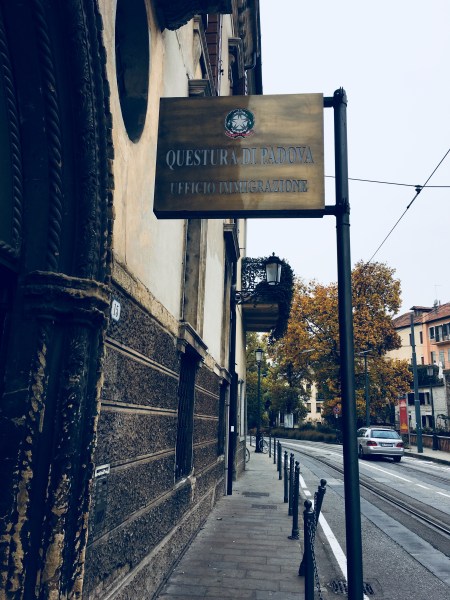
Here’s an example: we have a lot of immigrants and refugees in Padua. A half-IMG_3830million live in our region (that’s the legal ones), and that’s a very visible part of the stuff that goes on in the city – buses, trams, clinics, parks and street corners.

I can choose to see them different negatively (how they act, talk, dress, interact, etc.) or I can see the beauty (in how they act, talk, dress, interact, etc.)

My wife is my tutor in this. We were standing at the train station bus stop surrounded by immigrants and refugees. And I got frustrated with one who was… well, just in my way. Susan says to her, “the color of your scarf is beautiful.” Simple. But the most beautiful conversation followed. I was dumbstruck.

We got on the bus and we were completely surrounded by Africans. It only took a few minutes to realize everyone on the bus was on the way home from a church meeting on prayer. It was an experience that shifted my grid, perhaps for good.

All the good, beautiful, gracious, astounding, and rich around me can shout down the one thing I might find negative. If I’ll take time to listen.

Listening in the city – Rick