Category Archives: Points Along The Journey – Living A Missional Life

The word for the year…anonymity

A friend of ours planned a tour of Italian museums and recalled afterward that, while there were some awe inspiring artists –Caravaggio, Giotto, Tintoretto – the favorite by far was an “unknown” whose art was everywhere, very diverse, and over the nameplate of Sconosciuto.

My wife and I just finished reading through the Bible in a Year (on the YouVersion app under As it Happened – we recommend it for its chronological order). Near the end of our journey through the Bible, we read Hebrews, a book written to next-gen Jewish followers of Jesus. In the famous “Hall of Faith” chapter, the writer recounts the faith (and fate) of well-known Hebrew heroes. He also cites the unwavering faith of a crowd of believers who stood firm, often to the death, in their belief that God is worth it all. They are anonymous, at least on this side of heaven.

I have discovered that the biggest fear I’ve faced for years is anonymity – call it a fear of obscurity or becoming unknown, unseen, or unheard – but, until recently, this fear has been an overlooked but active drive in my life.

I know I can acknowledge this, and choose to turn from this fear … and embrace the privilege of obscurity.

My word of guidance for 2019 is Anonymity.

A university library in England maintains a seven-section archive of journals, pictures, magazines, and records related to Chinese missions over the past 150 years. When the first (and current) Chinese president of China Inland Missions, long-since renamed Overseas Mission Fellowship, walked into one of the rooms housing these records, he was overcome by the magnitude of seemingly anonymous people who had given their lives for his country-people, many martyrs for the Gospel of Jesus.

Dr. Fung told this story to students attending the missional conference Urbana ’09 (you can hear his story in the interview online) that, as he scan through the extensive lists, journals and pictures, he was reminded that the work of evangelism is done by people willing to live without a desire for fame, glory, and recognition.

When John the Baptizer saw Jesus gaining attention, he was asked by a somewhat envious follower what he should do. His response is timely and timeless: “Jesus must increase; I must decrease.”

In my case, the fear of anonymity has been too frequently a companion. I want Jesus to be enthroned, but I want a chair close by near the right side.

It has guided decisions. I’ve chosen worry and delayed action and played it safe so I wouldn’t look bad. And usually looked bad anyway.

It has silenced conversations. I’ve talked myself out of conversations I should have had or introductions to Jesus I should have made so I could protect my insecure reputation. And stayed insecure.

It has hidden love. I’ve left too many relationships lingering on the surface because I either didn’t want to know or chose not to be known. And loved less by doing so.

Today, careers are made by being seen, heard, photographed, liked, shared, hearted, retweeted, and reposted. Fame is even possible by taking the stage “anonymously.”  Artists hide their identity behind walls, bags, masks, and pseudonyms and “stay famously in the dark” to become celebrità oscura – Sia, HER, Elena Ferrante, Daft Punk, Banksy.

The most visible evidence of following Jesus is that I love in greater and greater measure. And the greatest measurement of love is sacrifice, putting others above myself, pushing others up and staying below the stage lights, decreasing so Jesus will be famous. He says He sees what’s done secretly and perhaps that’s more than enough recognition.

Maybe this year will produce such a beautiful work of truth and healing and compassion that anyone who sees it will know it was the hand of the Master Artist Who crafted it. I will decide more selflessly. Speak more freely and compassionately. Love without fear or shame.  I expect to be tempted to pick up a brush every now and then and offer to script my name into the corner. But, it’s my desire that it remain His work under the name plate of Sconosciuto.

In my own words,

Rick

P.S. I know it ironic to blog about anonymity. I like to know my words matter. And I’ll keep working on my motivations.

P.P.S. Conosciuto means “known.” Scononsciuto means “unknown.”
Spiritual renewal in unlikely places

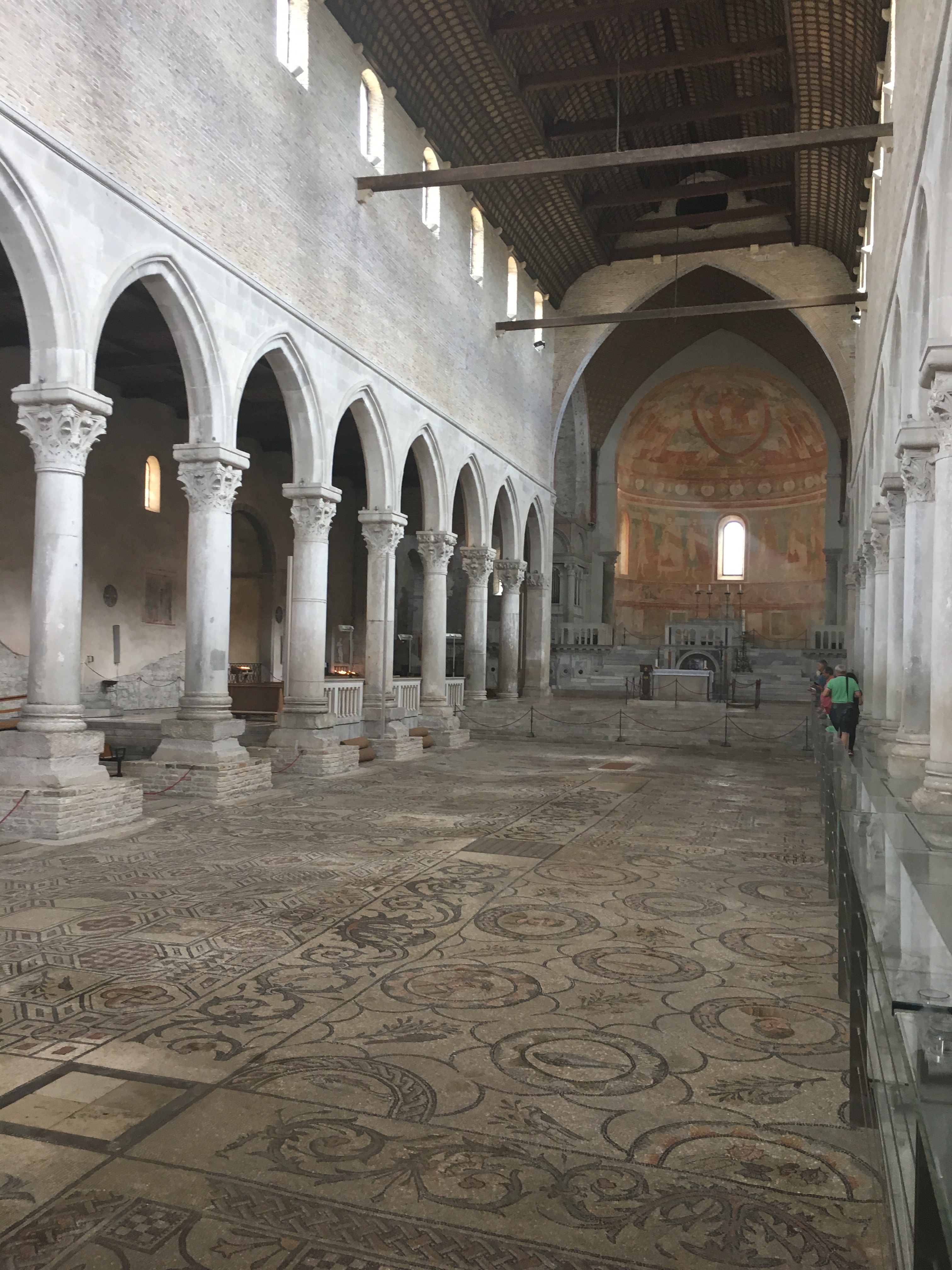
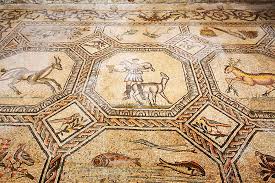
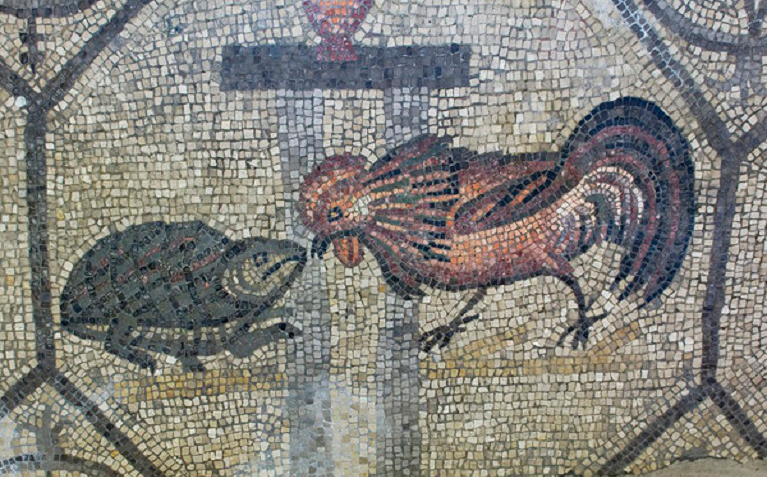
The tiled image was of a rooster and a turtle fighting it out, the rooster in frozen “near victory.” The entire basilica floor was tiled in mosaic – one inch pieces or less – that brought spiritual truths out of normal scenes of life. Baskets of bread and wine. Peacocks. A lamb with staff. Even a hippogriff (for you HP fans.)

Aquileia was one of the largest cities in Europe around 100 AD. Christianity had already begun to thrive in the international milieu of this port (it may have been Mark the Gospel-writer who first came to this city across the Adriatic from the Balkan peninsula.)

But it wasn’t until 313, and the Edict of Milan, that Christians could worship legally. Within five years, the first worship center and baptism room (yes, a full set of rooms for baptism) began. Along with what is now the largest modern example Christian mosaic art. It was art, but they mainly needed a floor that would stand up to the baptism waters (yes, they immersed), and the foot traffic of fishermen, Roman home owners, street peddlers, and senators.

My wife (Susan) and I visited Aquileia for an anniversary day trip. In this ancient church, we found beauty. I found renewal.

Christianity remained simple in this town – it was just a couple of centuries after the last Apostle died – and the truths of the Gospel found life in the symbols. God’s Kingdom is bounty – baskets of bread and wine. God is a lamb who cares for his children like little lambs.

Even the rooster (a metaphor for the dawn and light) gets the victory over the turtle (who always hid himself in darkness). In the Kingdom, light prevails but with the threat of darkness at the ready.

Near the altar, embedded in the floor are the Greek letters I-X-T-H-Y-S. The tiles declare Jesus-Christ-God’s-Son-Savior – and also introduce an extended theme of fishing, casting nets, enjoying the bounty of the sea (and a three-part scene of Jonah tossed to the sea monster, puked back onto the shore, and naked and unashamed in the care of his God).

It’s no wonder the largest scene is fishing – I’m certainly a fan – but, this city drew it’s physical existence from the gifts God gave them from the deep.

The symbolism is even more important for Christ-followers. There are fish needing to be caught. We are fishermen. And the Kingdom is the net. Simple. No grey areas here. It’s what Christians do because it’s what we are.

Within 100 years, the church was remodeled (though they kept the mosaics) and dedicated to the adoration of the Virgin Mary and the exultation of two saints (who gave their lives in for the Good News under Nero.) Those who would have chosen, if they could, to remain off-stage and point the praise the Jesus, became central. And it got complicated.

“God chose the foolish things in the world to shame the wise; God chose the weak things in the world to shame the strong. God chose the lowly things of this world and the despised thing – and things that are not – to nullify the things are are, so that no one may boast before Him.”

The less sophisticated, the better. And I found renewal and beauty when faith was simpler.

Seeing walls come down

We traveled the northern Italy city of Pordenone for church on La Festa della Momma. The worship was good. A guest preached, and the study was sound. But, it was our lunch afterward that totally ignited my faith again.

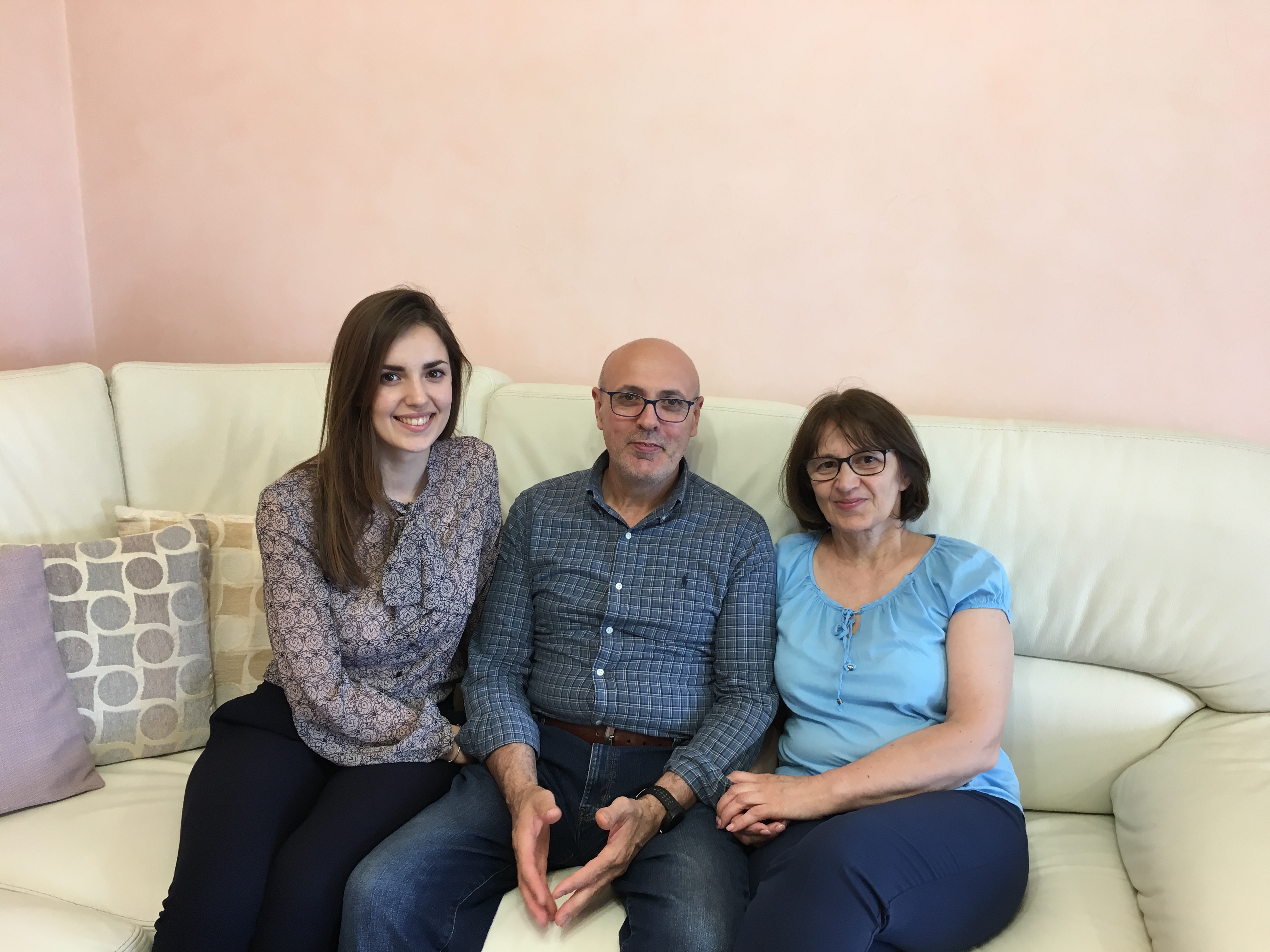
Our good friend, Adelina, who also has led in the Padova University Bible Study, invited us to lunch. At her home. With her mom and dad. Who speak no English.

The next three hours were amazing, and not just because of the pasta, baked swordfish, and roasted sweet potatoes (and dessert.)

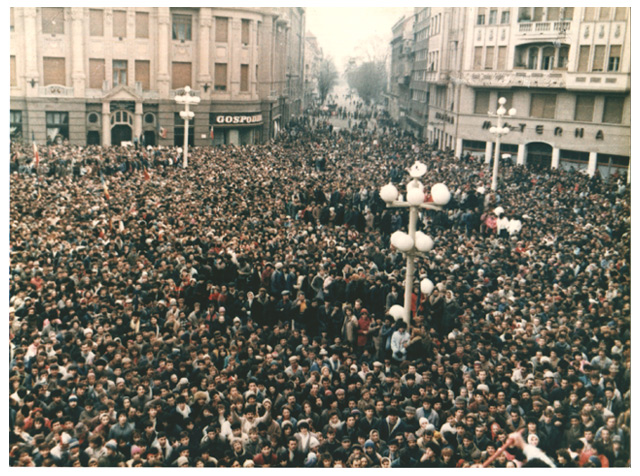
Nello and Stela migrated to Italy in 1998, but not before being a part of the movement of Christian young people that led to the wall coming down between the East and the West. George recounted how thousands of Romanians protested along the tram lines. When the water cannons came, and the arrests were made, thousands more replaced them.

What led to the Romanian Revolution (the only violent one – since the soldiers fired into the crowds at will – as the walls came down in Europe in December 1989) started when the government tried to oust an evangelical pastor from his flat. To protect him, hundreds and then thousands, encircled the pastor’s home. They sang hymns of worship and prayed throughout the night and into the coming days.

The crowds grew and the spark of freedom in worship became a flame.

When the water cannons reappeared, the crowd dismantled them and threw the pieces into the river. By now, the protest was city-wide and, within a week, led to a full regime change.

Nello recalled that the Christian faith was prominent in his Romanian culture, instrumental leading up to the Revolution, and grew even more so afterwards. He said that, in the persecution and suppression, faith grew vibrantly. But, now that there isn’t the “pressure” faith tends to be less important.

Still, he said that there were likely 40-50% of the nation who professed Jesus as Lord. More than any other nation in Europe.

Years ago, I remember watching the Romanians as they protested and marched to gain freedom to live, speak, work, own property, and worship. It was peaceful for the most, until the soldiers came to stop this march toward freedom.

But, on Mother’s Day, I met a man who had lived it, knew those who went to prison, and saw the wall come down.

The amazing thing of the whole story? It was worship of the Living God and love for a pastor that took out the first of the cold concrete of the dividing walls.

Some words are more important…

The polls are in and the top words banned in 2018 are fourteen overused words to avoid – included this year are “unpack”, “tons”, “drill-down”, and my favorite: “nothing-burger.” The number one vote-getter is “fake news.” Last year’s was “so” as in “I am so tired of lists.”

As we “off-board” last year and “on-board” 2018, it seems everyone is trying to put words to the year almost gone, maybe thinking what they might need to “walk back” or even “double down” on from the year –  and, or course, they “seeking traction” and are trying to “wrap their heads around” the coming months. I better stop now.

Some words are more important than others. Jesus came back to certain phrases to help us remember the important stuff. “Whoever has ears to hear, let him listen.” “You’ve heard it said, but I say to you” and it’s KJV companion, “Verily, verily, I say to unto you.” But, at the top of the list is ” The kingdom of heaven (or God) is like…”

Jesus would then attach to this phrase something totally, well, common. Relatable. A farmer, or a seed, or a net, or yeast, or a homeowner, or a wedding party.

My first thoughts about the “kingdom of heaven” is to look up, to the future, to eternity. And certainly eternity and heaven are within the stories Jesus told about the kingdom. But what we do here and now is kingdom stuff, too.

  • The kingdom of heaven is like the the woman who makes coffee for her friends so they can talk about Jesus around her table.
  • The kingdom of heaven is like the builder who hires and treats his workers with honor so they will see Jesus in his life.
  • The kingdom of heaven is like the the living room filled with people from different countries, languages, colors, and stories whose lives have been changed by the Savior.
  • The kingdom of heaven is like… (On 1/2/2018, let’s leave a blank and see how we can fill it in each day by inviting the common things in our life to connect and display the supernatural acts of God.)

Call it a “paradigm shift” or an “adjusted grid” – Perhaps 2018 is the year that I will ask how the common, the relatable things in my life, can show others what the kingdom of heaven is like.

For the King – Rick

P.S. My pastor and friend in Myrtle Beach, Tim Holt, has said more than once that the Kingdom is present when the King gets His way.

P.P.S. (List provided by Lake Superior State University – they’ve offered this list for decades! https://www.freep.com/story/news/local/michigan/2017/12/31/2018-banned-words/993549001/)