All posts by Richard Harrell

Unknown's avatar

About Richard Harrell

Connecting life, art, and the power of story in ways that change my world. I am a disciple-maker and lover of Jesus living in a small town in Georgia. I am also on a spiritual journey, looking for points in life that point me to new and full life in Christ Jesus.

Seeing walls come down

We traveled the northern Italy city of Pordenone for church on La Festa della Momma. The worship was good. A guest preached, and the study was sound. But, it was our lunch afterward that totally ignited my faith again.
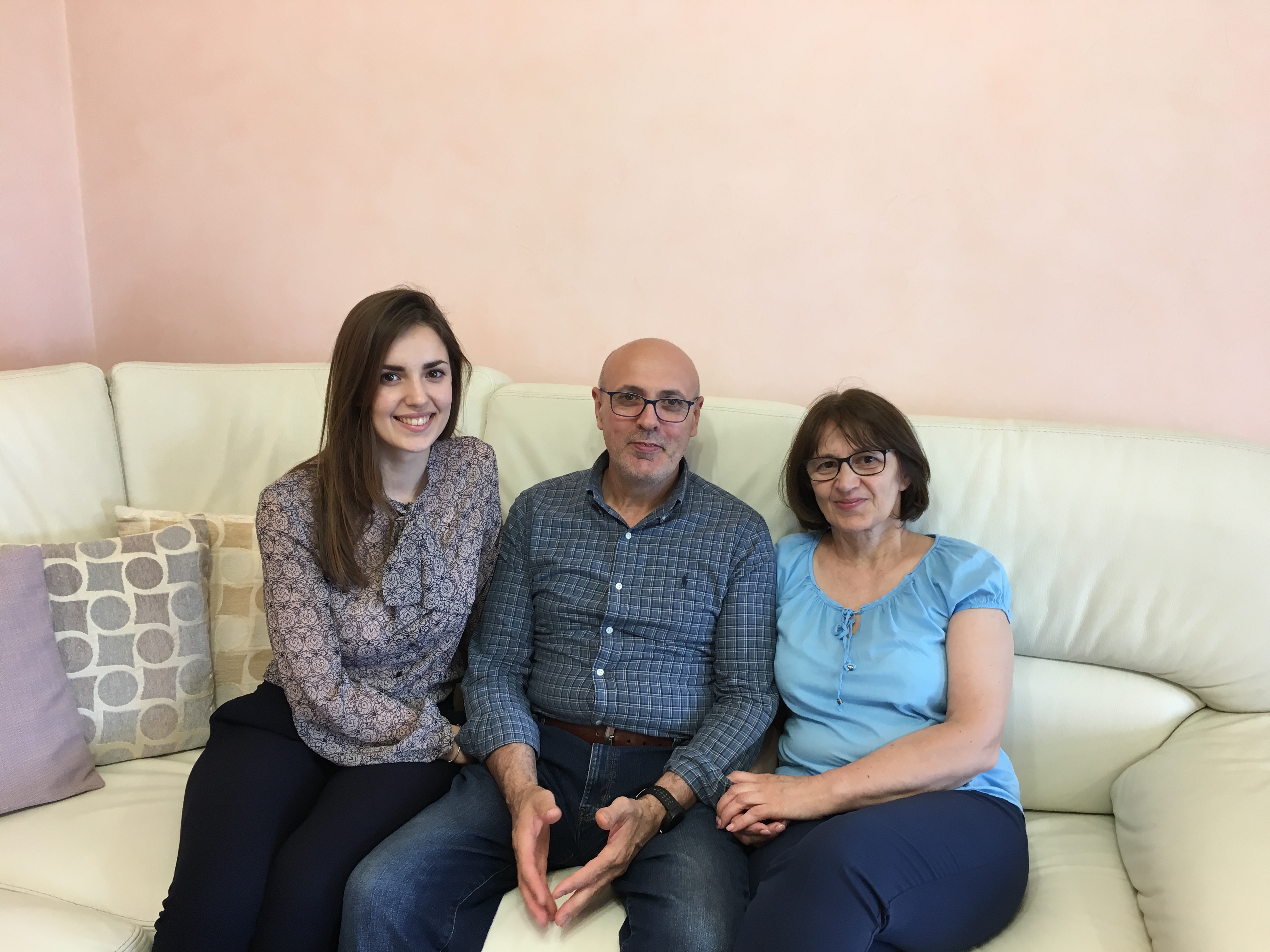
Our good friend, Adelina, who also has led in the Padova University Bible Study, invited us to lunch. At her home. With her mom and dad. Who speak no English.

The next three hours were amazing, and not just because of the pasta, baked swordfish, and roasted sweet potatoes (and dessert.)

Nello and Stela migrated to Italy in 1998, but not before being a part of the movement of Christian young people that led to the wall coming down between the East and the West. George recounted how thousands of Romanians protested along the tram lines. When the water cannons came, and the arrests were made, thousands more replaced them.

What led to the Romanian Revolution (the only violent one – since the soldiers fired into the crowds at will – as the walls came down in Europe in December 1989) started when the government tried to oust an evangelical pastor from his flat. To protect him, hundreds and then thousands, encircled the pastor’s home. They sang hymns of worship and prayed throughout the night and into the coming days.
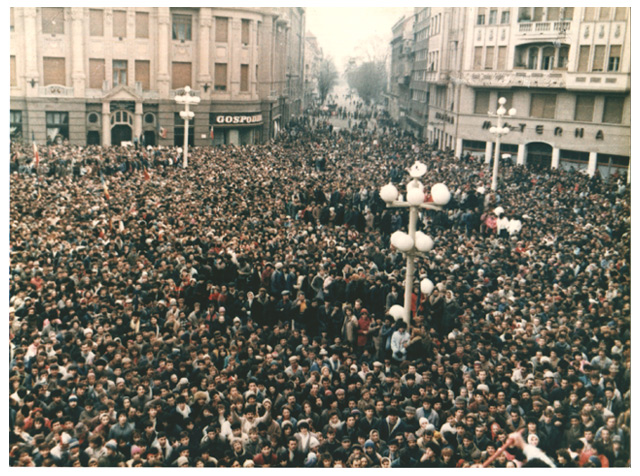
The crowds grew and the spark of freedom in worship became a flame.

When the water cannons reappeared, the crowd dismantled them and threw the pieces into the river. By now, the protest was city-wide and, within a week, led to a full regime change.

Nello recalled that the Christian faith was prominent in his Romanian culture, instrumental leading up to the Revolution, and grew even more so afterwards. He said that, in the persecution and suppression, faith grew vibrantly. But, now that there isn’t the “pressure” faith tends to be less important.

Still, he said that there were likely 40-50% of the nation who professed Jesus as Lord. More than any other nation in Europe.

Years ago, I remember watching the Romanians as they protested and marched to gain freedom to live, speak, work, own property, and worship. It was peaceful for the most, until the soldiers came to stop this march toward freedom.

But, on Mother’s Day, I met a man who had lived it, knew those who went to prison, and saw the wall come down.

The amazing thing of the whole story? It was worship of the Living God and love for a pastor that took out the first of the cold concrete of the dividing walls.

Doing Less to do more

Our men’s group is studying Exodus 18 tonight. The story is a classic case in problem-solving. It opens with the back-story; how God had developed Moses’ the Leader. Then it moves to the crisis; the kind of crisis that most see, but nobody calls out. The final act is the resolution; it comes through a visit from the past that alters the future.

Act One:

Moses and the Israelites are out of reach of Egypt, free, and at the rendezvous point God pointed them toward earlier. The Hebrew count is at 600,000 men plus the women and children. It’s a crowd.

While they camp in the desert near the Mountain of God, Moses gets a visit from someone out of his past – Jethro, his father-in-law, the man whose sheep he watched for close to forty years. He comes for one purpose – the bring Moses’ family back now that they were free – but is surprised and used for another.

They throw a party and Moses tells the whole story, perhaps for the first time to one “outside the camp.” Moses the Leader had been God’s instrument to deliver the people. The Egyptian oppression was over; the people were alive and free.

Act Two:

Jethro gets an inside look into Moses the Leader and how his day-to-day work progressed, now that he (and 600,000 of his closest friends) were free. He sits down before all those with problems or disputes and hears them one-by-one, to infinity and beyond. All day and into the evening.

Three issues he faced that I see:

First, Moses created the mess he was in. He assumed the leadership God had given him was for him alone. That left him with long lines of complaints and issues, and little time to settle it all.

Second, Moses solved problems for others because that’s the way he’d always done it (remember the murdered Egyptian?) He kept doing it the same way because it had worked for him so far. At least, from where he sat.

Third, Moses led by himself. And leaders who lead alone lead blind. They don’t see what others see. Sure, he listened to the problems and bickering for hours on end; but he must have missed what the people had to endure, standing around, reliving everyone’s problems. And waiting.

Act Three:

Jethro reveals what Moses hadn’t seen before. The conversation seems a bit heated, or at least very honest. He presents the resolution – put leaders in place over 1000’s, 100’s, 50’s and 10’s and let them listen, negotiate, judge, and lead – and like a good problem-solver, leaves it in the hands of the leader; in this case, Moses. The timing was right and, after the sting of Jethro’s rebuke lessened, he began the process of raising up judges, and letting leaders lead. He no longer had to listen to every dispute – he just got the big ones; and the people had leaders they could turn to.

I have heard or read a bunch of teaching on this chapter. It’s a discipleship strategy. It’s a business model. It’s an organizational plan. But, mainly it was a rescue operation. Moses was in a fix. He was heading toward burn-out; so were the people.

Here are some applications:

1) Leading alone can be dangerous, no matter your organization. Jethro’s warning was four-fold:

  • It’s not good (as in, the plan won’t work in the long run.)
  • It will wear you and everyone else out (each hour will make you more and more tired.)
  • It is to heavy for you (the burden of everyone’s problems is too much for one set of shoulders.)
  • You can’t do it alone (you need some new levels of problem-solving to ease the burden.)

So, if you are leading alone, begin with one or two who are godly and honest, and train them up (how to live, how to behave, and how to wisely make decisions.)

2) Don’t fear the new voice. Someone with wisdom, humility and seeing things differently than “from where you sit” can take things to a new place. A new set of eyes can see the big picture and help pull the threads of a resolution together. In fact, though the visit was brief, Jethro changed the future for God’s people.

3) Raise the bar high, but not beyond reach. Let leaders lead. But don’t put a “50’s” leader over “1000.” Give them room to exercise their gifts, develop their leadership voice, and even make mistakes. But, give them a safety net. Be nearby, but don’t hover. They don’t need a daddy or mommy; they need a mentor.

The best part of the story, though, often gets lost. Jethro, already a priest from Midian, took the God of the Hebrews as Lord. He heard the good news of the deliverance, and declared with his voice and sacrifice, that the Lord is God above all gods. That should be the outcome of our own leadership.

Some words are more important…

The polls are in and the top words banned in 2018 are fourteen overused words to avoid – included this year are “unpack”, “tons”, “drill-down”, and my favorite: “nothing-burger.” The number one vote-getter is “fake news.” Last year’s was “so” as in “I am so tired of lists.”

As we “off-board” last year and “on-board” 2018, it seems everyone is trying to put words to the year almost gone, maybe thinking what they might need to “walk back” or even “double down” on from the year –  and, or course, they “seeking traction” and are trying to “wrap their heads around” the coming months. I better stop now.

Some words are more important than others. Jesus came back to certain phrases to help us remember the important stuff. “Whoever has ears to hear, let him listen.” “You’ve heard it said, but I say to you” and it’s KJV companion, “Verily, verily, I say to unto you.” But, at the top of the list is ” The kingdom of heaven (or God) is like…”

Jesus would then attach to this phrase something totally, well, common. Relatable. A farmer, or a seed, or a net, or yeast, or a homeowner, or a wedding party.

My first thoughts about the “kingdom of heaven” is to look up, to the future, to eternity. And certainly eternity and heaven are within the stories Jesus told about the kingdom. But what we do here and now is kingdom stuff, too.

  • The kingdom of heaven is like the the woman who makes coffee for her friends so they can talk about Jesus around her table.
  • The kingdom of heaven is like the builder who hires and treats his workers with honor so they will see Jesus in his life.
  • The kingdom of heaven is like the the living room filled with people from different countries, languages, colors, and stories whose lives have been changed by the Savior.
  • The kingdom of heaven is like… (On 1/2/2018, let’s leave a blank and see how we can fill it in each day by inviting the common things in our life to connect and display the supernatural acts of God.)

Call it a “paradigm shift” or an “adjusted grid” – Perhaps 2018 is the year that I will ask how the common, the relatable things in my life, can show others what the kingdom of heaven is like.

For the King – Rick

P.S. My pastor and friend in Myrtle Beach, Tim Holt, has said more than once that the Kingdom is present when the King gets His way.

P.P.S. (List provided by Lake Superior State University – they’ve offered this list for decades! https://www.freep.com/story/news/local/michigan/2017/12/31/2018-banned-words/993549001/)

All Mission Supporters are not created equal…

From someone on the field who has some wonderful missional people in my life, I have learned to live by grace when it comes to the weighing the excitement people share about missions. (Please read on and don’t judge me by the title.)

  • Some are genuinely passionate to see the church go to the nations – after all, in more nations than not, a McDonald’s full of people would not have one solitary evangelical Christ-follower (other than you) if you walked in.
  • Some are excited for us that we are going on the adventure. And doing so for God.
  • Some look incredulously at us and ask, “what’s that all about”. In the words of my late father-in-law, many think, “I ain’t left nothing over there.”
  • And some wish they could go, want to go, would try to go if they could find the door opening. I can see it in their eyes. They want to be a part of the adventure.

So, how does this translate into being a mission supporter? And are they created, or does missional passion emerge?

Perhaps, to move further down this path, a quick recap of the needs missionaries have might help with perspective:

Food, transportation, housing, clothing, ministry resources, medical and dental care, the occasional vacation or conference – and since I live in Italy, a regular measure of coffee. Add to this short-term teams to come and help, church rent, Bibles, project resources, and special ministry funds for reaching out to the different kinds of needs. (I don’t know a missionary yet who is asking for the moon.)

Mission supporters come in all shapes and sizes. And God, somehow, matches us mission supporters with these needs.

I know fixed income Christians who give regularly beyond their tithe. I’ve met reasonably educated and employed church-goers who give up things they’ve earned the right to spend their resources on so they can give to multiple missional causes. Some of my friends are highly educated, highly skilled, and/or blessed with great wealth, and they strategically look for and give to mission needs. I even have retired friends who could be on the back nine who have reinvented their skills in business so they can give all the profits to Kingdom causes.

Then, how can each of us nurture our lives so we can be more missional?

  1. Overestimate … each moment of prayer for missions. Most of us, honestly, low-ball our impact in the prayer closet. We just don’t “feel” we are making a difference. God says otherwise. When we pray, we change and we connect God’s purposes and resources to those for whom we pray.
  2. Reposition … the heart. We can get pretty wrapped up in what’s before us, and forget what is happening across the street or around the globe. Ask God for an upward love – on Him, and an outward love – for the world, and for specific cultures and people. Jesus said the heart resides with what we value.
  3. Lavishly spend … time with missional people. Find ways to get “in the way” – get into the lives of missionaries. Learn about their nations. Find ways to surprise them with your presence and word of encouragement.
  4. Turn up the heat … on giving and going. Your heart follows your bank account. My pastor from Crossroads Church in Newnan taught me this in relation to giving. If you don’t give at all, give some to someone. If you don’t give regularly, give monthly to someone. If you don’t give a percentage, begin to give a specific portion. Make your tithe count in your church and strategic giving count to missional causes.

It’s very true that “disciples are made, not born”* and the same is true of mission supporters. We are all (yes, this missionary is a missionary supporter, too) on the way to becoming better mission supporters. God, the God of The Mission** to save our world, is working it in us.

From the field – Rick

* Two disciple-makers, Howard Hendricks and Walt Henrichsen, wrote Disciples are Made not Born years ago. Still an awesome book to read. The premise: each of us as Christ-followers have the potential to change our world, but we need to make the choices to be a disciples and find others who can pour into our lives and into whom we can pour into theirs. (Another shout out to Ken Adams, pastor of Crossroads Church Newnan GA – we are called to “be and build disciples of Christ.)

** I hear at Christmas time how Jesus came into the world as an immigrant (the trek to Egypt is the nod this claim gives). In reality, He was missional in the Advent – He came to declare and be Good News: the Kingdom of God is at hand (Isaiah 61, Luke 4, John 3).